How automatic defrost is supposed to work
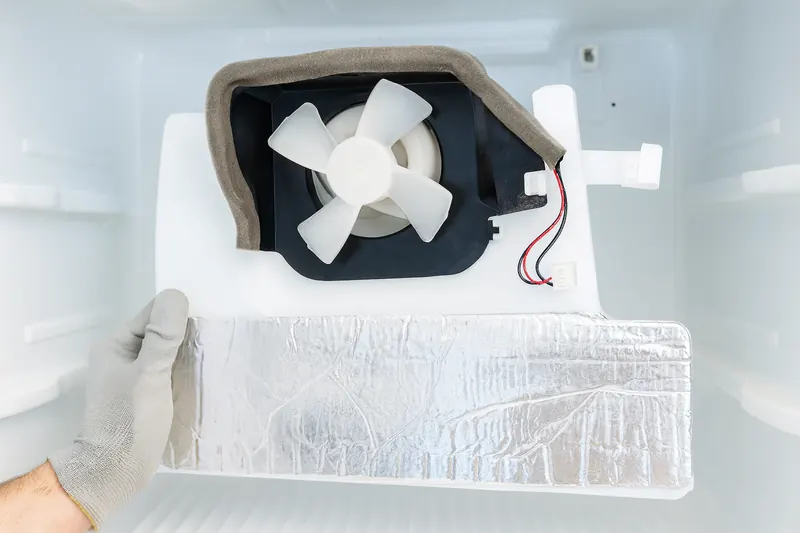
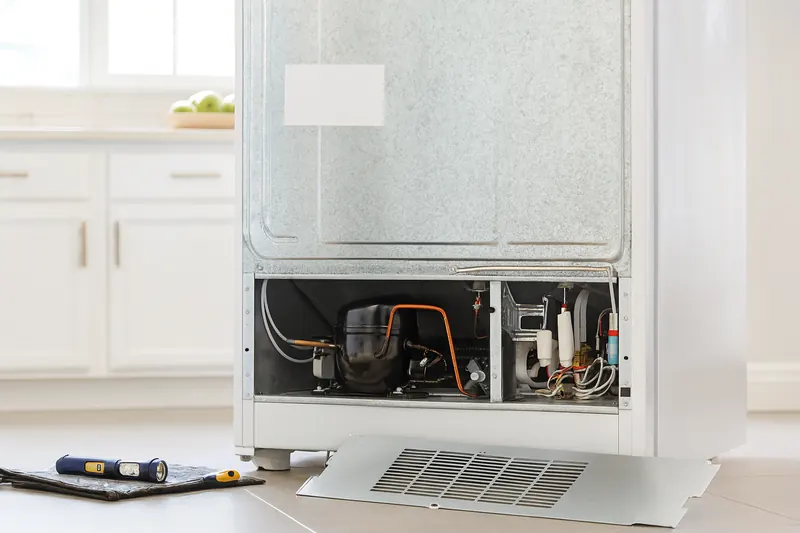
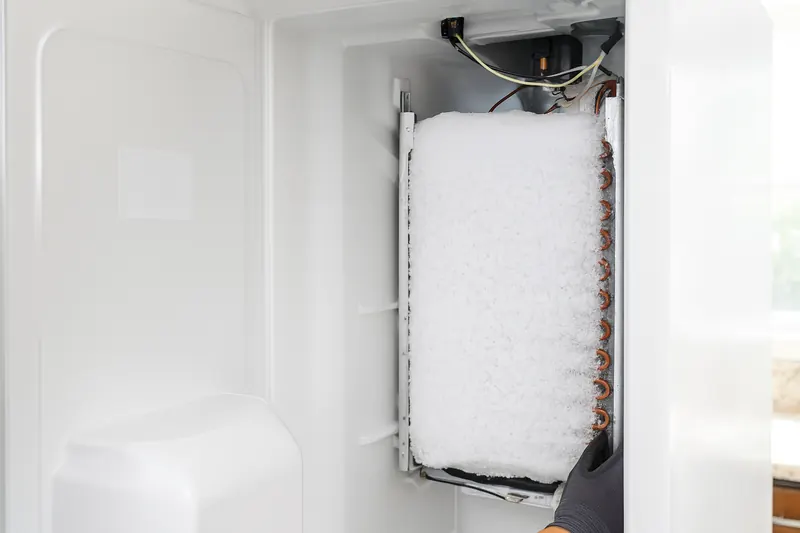
The evaporator coil runs well below freezing, so moisture from the air freezes onto it. A few times a day the control stops the compressor and powers a defrost heater under or around the coil. A defrost thermostat (a bimetal disc) or an evaporator sensor watches the coil temperature and ends defrost when it warms above freezing. The meltwater runs down a drain to a pan near the compressor, where it evaporates.
If any of those parts fail, the frost never fully melts. Each day adds more, until the coil is a solid block.
What it usually looks like
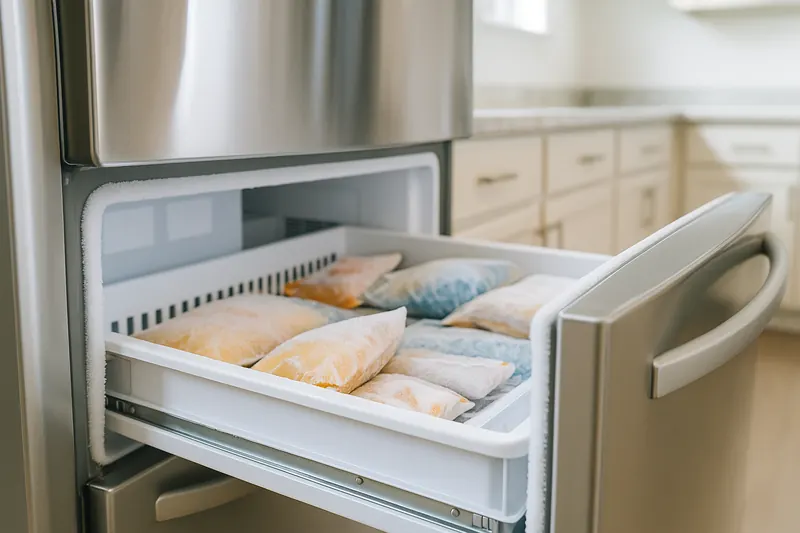
- An even white frost or a block of ice visible through the freezer vents or across the back panel
- The fresh-food section warming over several days, then the freezer
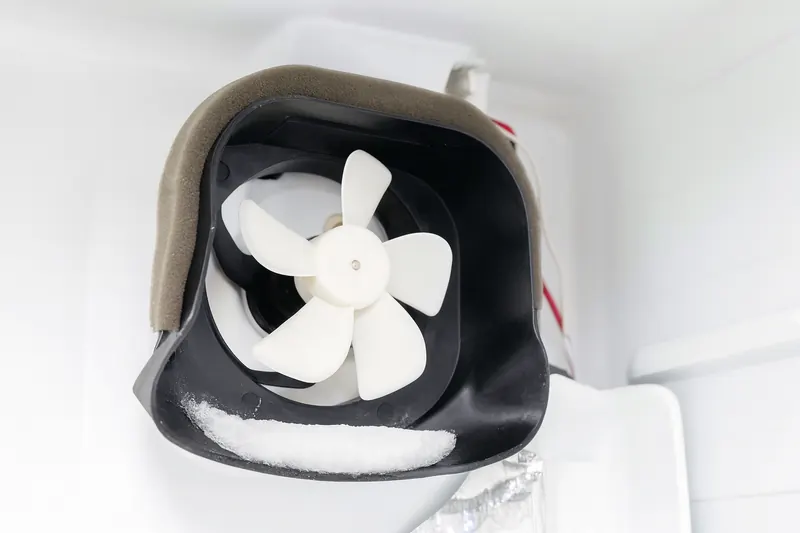
- Grinding or ticking from the freezer as the fan blade hits ice
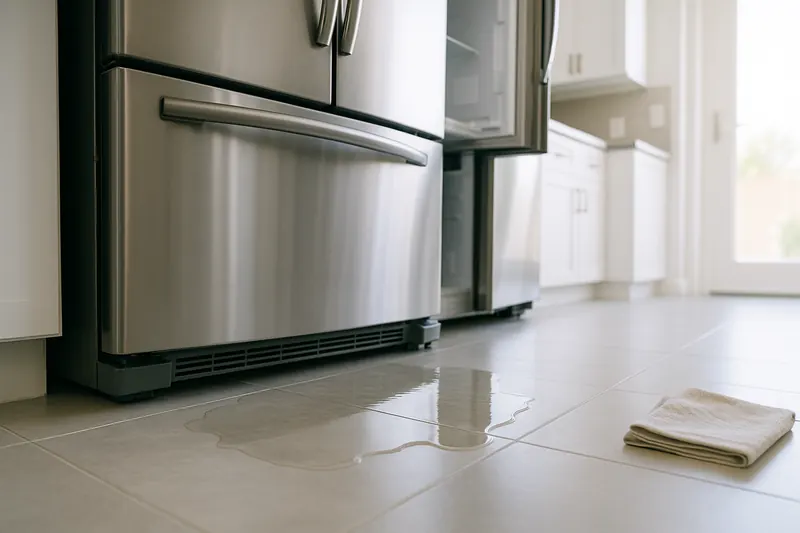
- Water inside the cabinet or ice on the freezer floor if the drain also froze
- Cooling that returns after the refrigerator is unplugged for a day, then fades again
Is it a defrost failure or a moisture problem?
| Where the ice is | What it usually means |
|---|---|
| Evenly across the back panel / evaporator | Defrost system failure |
| On food, shelves, door edges and the gasket | Warm, humid air leaking in — see frost buildup |
| Thick only at the bottom of the coil, with water or ice on the floor | Frozen or clogged defrost drain |
| Light frost only on the first few inches of the coil | Possible low refrigerant — see running but not cooling |
Most common causes
Defrost heater burned open
The heater element (a glass-tube radiant heater, a calrod or a foil heater, depending on the design) simply stops heating. It is one of the most common failures on refrigerators of every brand. The fix is to replace the heater.
Defrost thermostat or evaporator sensor failed
If the bimetal thermostat fails open, the heater never receives power. If an electronic sensor reads wrong, the control may end defrost too early or skip it. These parts are tested at temperature and against the manufacturer's resistance chart.
Defrost control, timer or board output
Older refrigerators use a mechanical defrost timer; newer ones start defrost from the main control board, often adaptively based on door openings and run time. A stuck timer or a failed relay on the board means defrost never starts. See control board repair.
Frozen or blocked drain
The heater works, but meltwater cannot leave the evaporator area and refreezes at the bottom of the coil. Some models use a drain heater or a copper drain strap that can fail. Clues: ice concentrated low on the coil, water inside the cabinet, or ice on the freezer floor.
What you can safely do now
- Manual defrost: unplug the refrigerator, empty the freezer into coolers, prop the doors open and put towels down. Allow 24–48 hours for a heavy block of ice. Do not chip ice with tools — puncturing the evaporator turns a defrost repair into a sealed-system repair.
- Restart and observe: if cooling returns, the sealed system is likely fine and the defrost system is the suspect.
- Check door seals so moisture is not adding to the problem.
A manual defrost is a test and a stopgap, not a fix.
What a refrigerator technician checks
- Removes the evaporator cover and reads the frost pattern
- Tests the defrost heater for continuity and current draw
- Tests the defrost thermostat or evaporator sensor at temperature
- Forces a defrost cycle (most boards have a service mode) and confirms the heater actually heats
- Checks the drain path, drain heater and drain strap
- Confirms the evaporator fan was not damaged by ice
Frequently asked questions
Why is the back wall of my freezer covered in ice?
Because the automatic defrost has stopped working. The heater, the defrost thermostat or sensor, or the control has failed, so frost builds up on the evaporator coil behind the panel.
Is a defrost repair expensive?
No. It is among the most common and affordable refrigerator repairs — typically a few hundred dollars. See defrost system repair and pricing.
Why does it keep coming back after I defrost it?
Because melting the ice removes the symptom, not the failed part. The frost rebuilds over one to three weeks.
Can I use a hair dryer to speed up defrosting?
On low heat and kept moving, carefully, it can help melt ice faster. Never aim it at plastic parts for long, and never use sharp tools on the coil.