What it usually looks like
- The fresh-food section reads 37°F in the morning and 45°F by evening
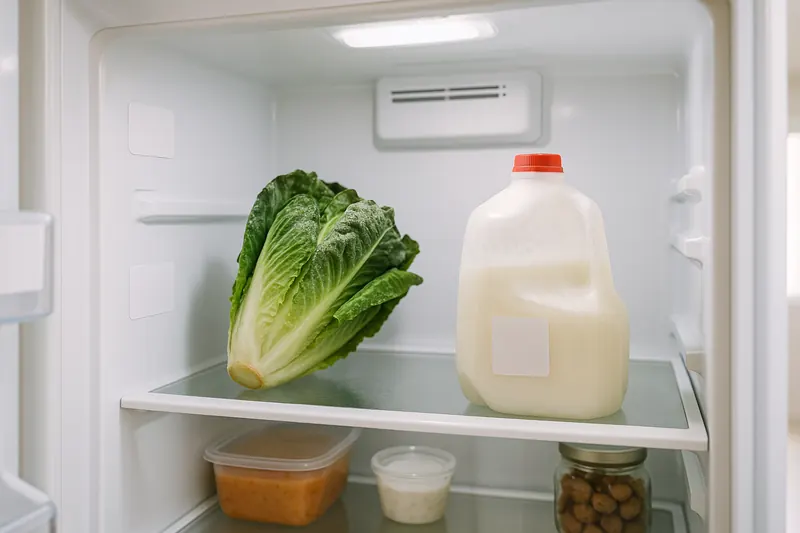
- The top shelf is warm while the crisper drawers are cold — or the reverse, with lettuce freezing at the back
- Cooling seems fine for a few days, then fades, then recovers
- The display shows normal set points while a thermometer disagrees
Some swing is normal. A refrigerator may rise several degrees during and right after a defrost cycle or after the door has been open for a while, then recover within an hour. Swings that last for hours, or that keep getting larger, are not normal.
Most common causes
Air damper sticking
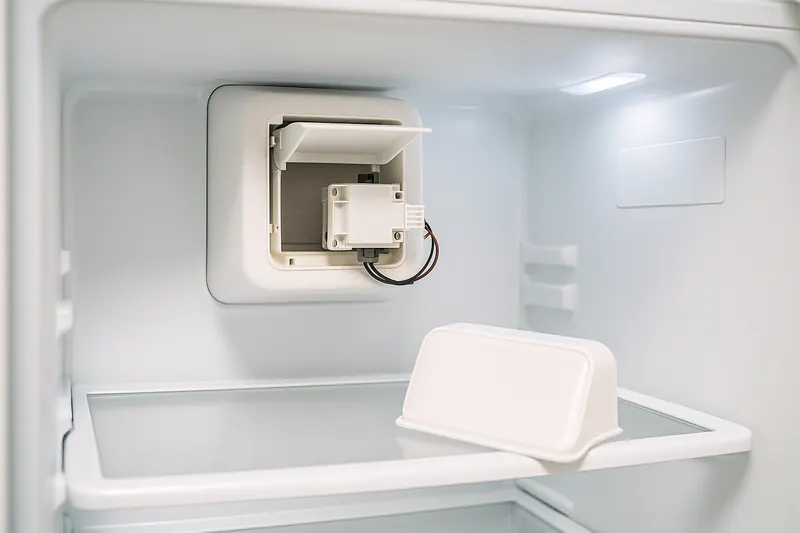
The damper controls how much freezer air enters the fresh-food section. A damper that sticks partly closed — or iced shut — gives a warm fridge; one that sticks open can freeze food near the outlet. Because dampers often stick intermittently, temperatures swing. Repair: replace the damper assembly or its control; fix any moisture that is icing it.
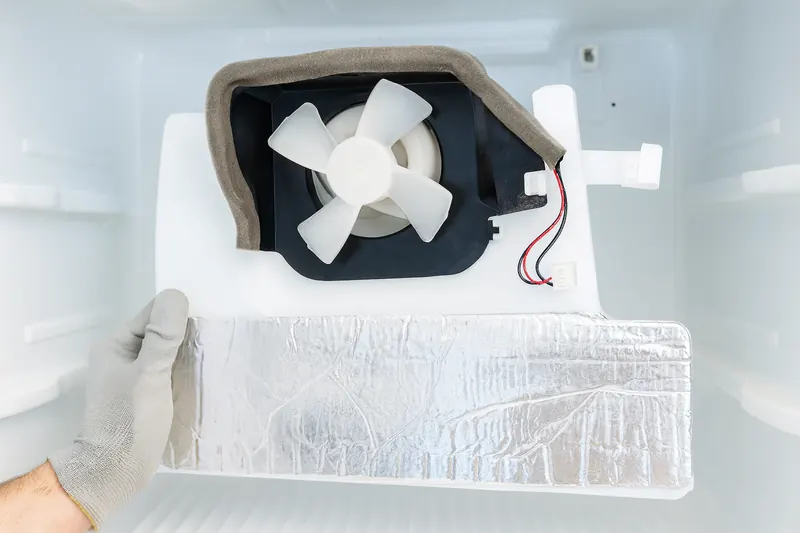
Evaporator fan slowing or stopping intermittently
A fan with worn bearings may stall when cold and run once warmed, or stop when ice touches the blade. Clues: occasional grinding, airflow that comes and goes. See fan motor replacement.
Early defrost problems
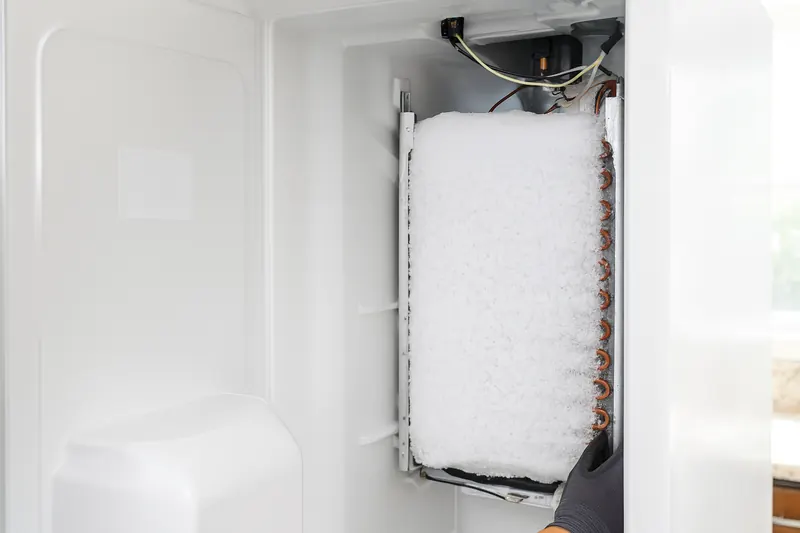
Before a defrost failure fully blocks the coil, partial defrosts leave some ice behind each cycle. Cooling works after a successful defrost and fades between them. Left alone, this becomes a frozen evaporator.
Temperature sensor drifting
A thermistor that reads a few degrees off makes the control cool too little or too much. Clues: the display disagrees with a thermometer. Repair: test against the manufacturer's resistance chart and replace the sensor.
Heat load and condenser performance
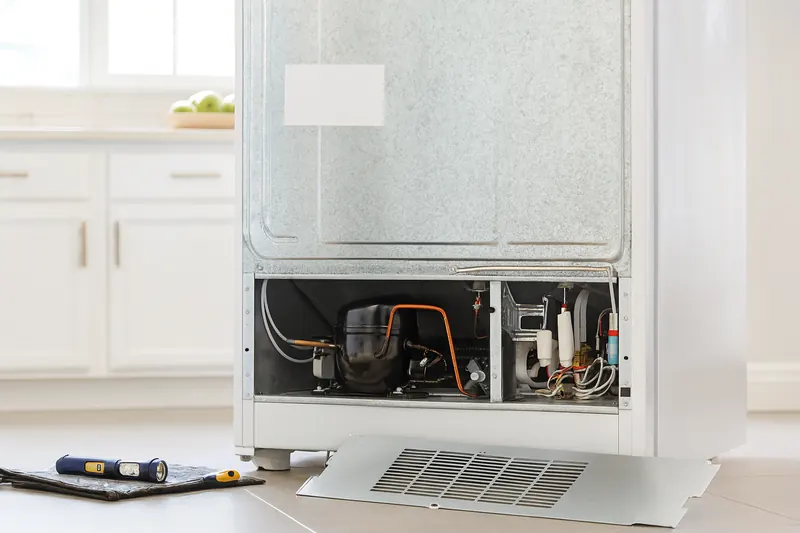
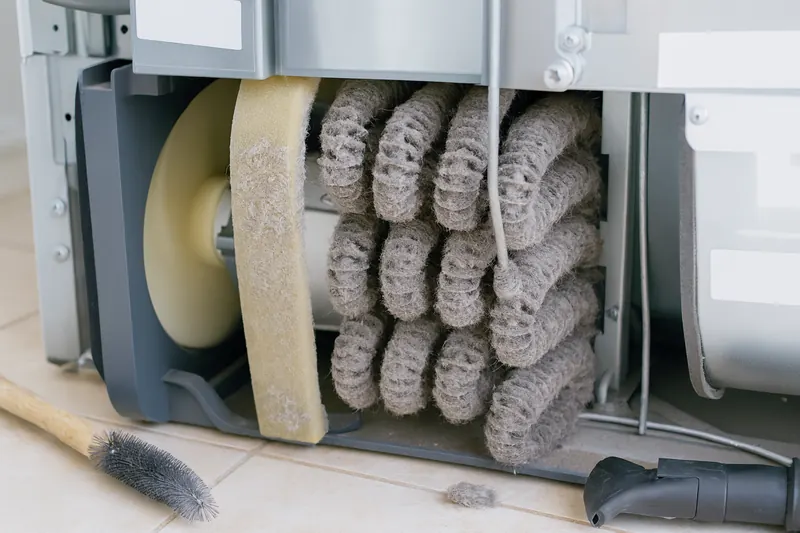
In Las Vegas, a refrigerator that keeps up in the morning may fall behind at 4 p.m., when the kitchen is warmest and the door has been opened all day. A dusty condenser or a weak condenser fan makes this much worse. Clues: warmest in late afternoon and evening; the compressor seems to run constantly. See running constantly.
Door and gasket problems
A door that does not close completely, or a gasket that seals only part of the way around, lets warm air in whenever the cabinet is under load. See refrigerator sweating.
What you can safely check
- Put one thermometer on the top shelf and one in the crisper, and log both morning and evening for two days. A pattern tells a technician a lot.
- Keep food away from the cold-air outlet and the return vents.
- Check that the doors close on their own and the gaskets seal.
- Clean the condenser.
- Listen for intermittent grinding from the freezer.
What a refrigerator technician checks
- Damper position and operation through a full cooling cycle
- Evaporator fan speed and bearing condition
- Evaporator frost pattern for signs of incomplete defrost
- Thermistor readings compared with actual temperatures
- Condenser condition and compressor run time under the current room temperature
- Control board diagnostics or stored fault codes where available
Frequently asked questions
Why is my refrigerator warm on top and cold on the bottom?
Cold air usually enters near the top rear. If too little is arriving — a sticking damper, a slow fan, or partial ice on the coil — the top shelf warms first. Cold air also sinks, so the drawers stay colder.
Is it normal for refrigerator temperature to go up and down?
A swing of a few degrees during defrost or after door openings is normal and recovers within an hour or so. Larger or longer swings point to a fault.
Why is my refrigerator cooling only some of the time?
Intermittent cooling usually means a part that works sometimes: a sticking damper, a fan with worn bearings, a relay that occasionally fails to close, or partial defrost. Logging temperatures helps catch it.