Common causes
- Temperature setting too low. Some displays show a setting, not the actual temperature. Aim for 37°F.
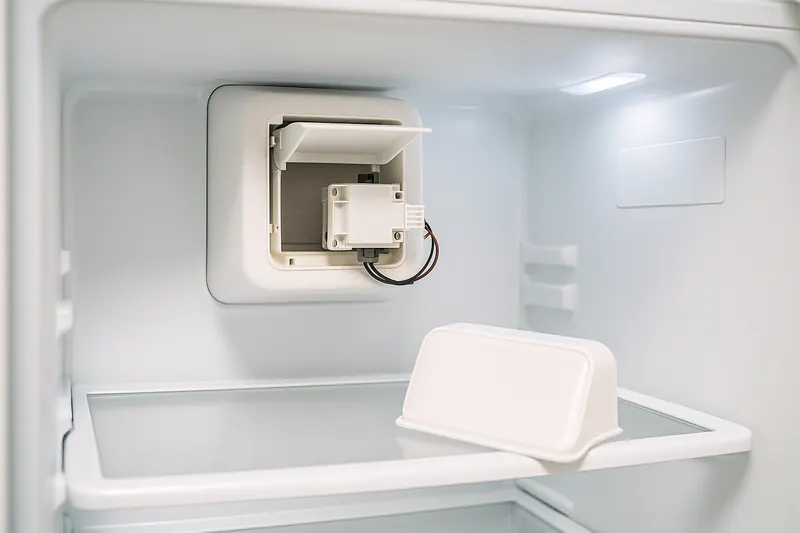
- Air damper stuck open. The damper controls how much freezer air flows into the fresh-food section. Stuck open, it floods the compartment with sub-zero air.
- Failed thermistor. If the sensor reads warmer than reality, the control keeps cooling.
- Control board fault. Less common, confirmed after testing sensors and dampers.
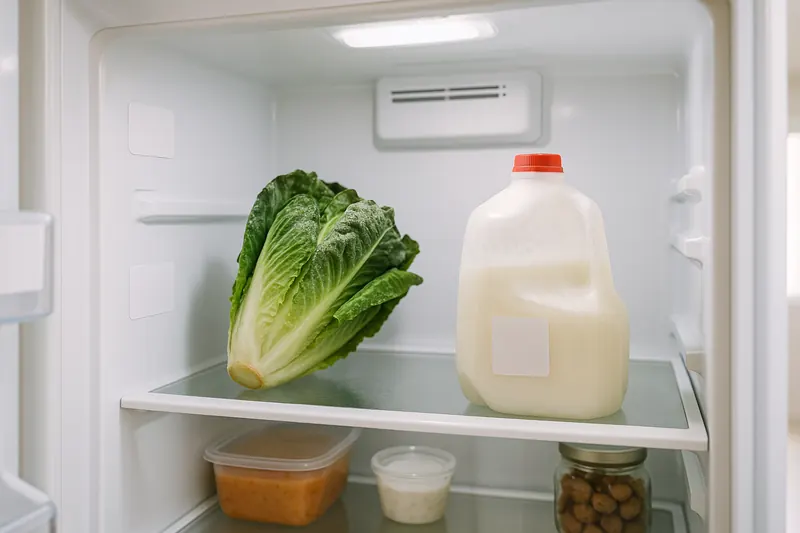
- Food placed in front of the cold-air vent. Items directly under the vent can freeze even when the overall temperature is fine.
- Garage installation in winter. Some refrigerators behave unpredictably in a cold garage.
What you can check
- Put a thermometer in a glass of water on the middle shelf and read it after 24 hours.
- Move food away from the vents.
- Turn the setting up by one or two degrees and wait 24 hours.
What a refrigerator technician checks
- Actual temperatures versus the set point and display
- Damper position and whether it closes fully
- Fresh-food thermistor resistance against the manufacturer's chart
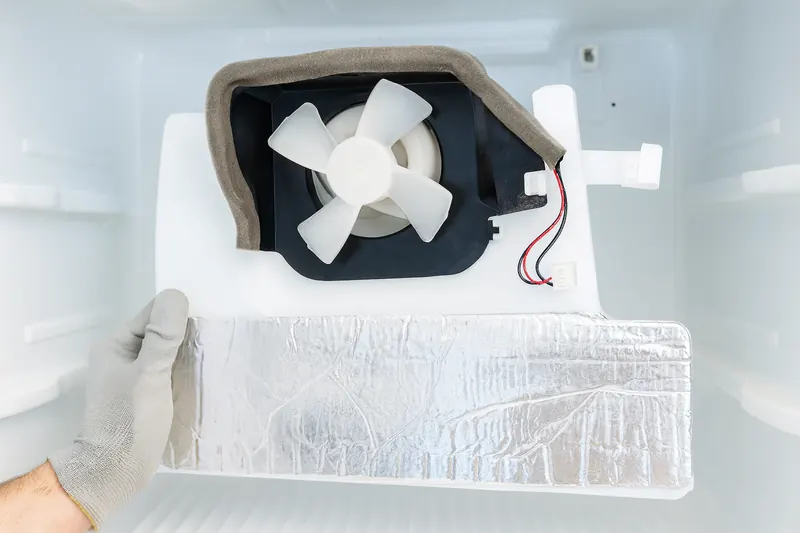
- Control board output to the damper and fans
- Garage installations: ambient temperature and the model's rating
Frequently asked questions
Why does food freeze only on the top shelf?
Cold air usually enters the fresh-food section near the top. Items directly in that path can freeze. Move them, and if the problem continues, the damper may be stuck open.
Can a too-cold refrigerator damage itself?
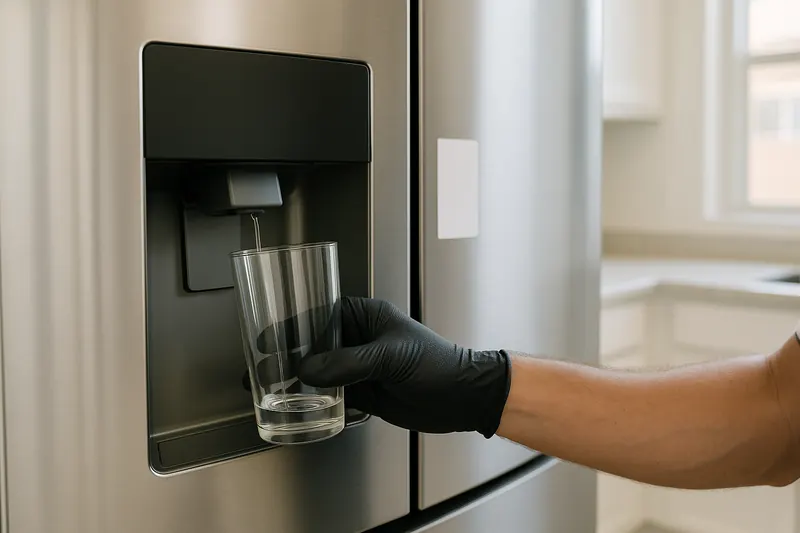
Usually not directly, but running colder than needed costs energy, and frozen water lines can stop the dispenser.