Start here: which pattern matches yours?
The single most useful clue is where it is warm and whether the compressor is running. Put an appliance thermometer in a glass of water on the middle shelf and another in the freezer, wait a few hours, then compare with this table.
| What you see | Usually points to | Go to |
|---|---|---|
| Freezer near 0°F, fresh-food section warm | Cold air is not reaching the fridge: evaporator fan, iced coil, damper | Freezer cold, fridge warm |
| Both compartments warm, compressor running | Condenser airflow, refrigerant leak, restriction or a weak compressor | Running but not cooling |
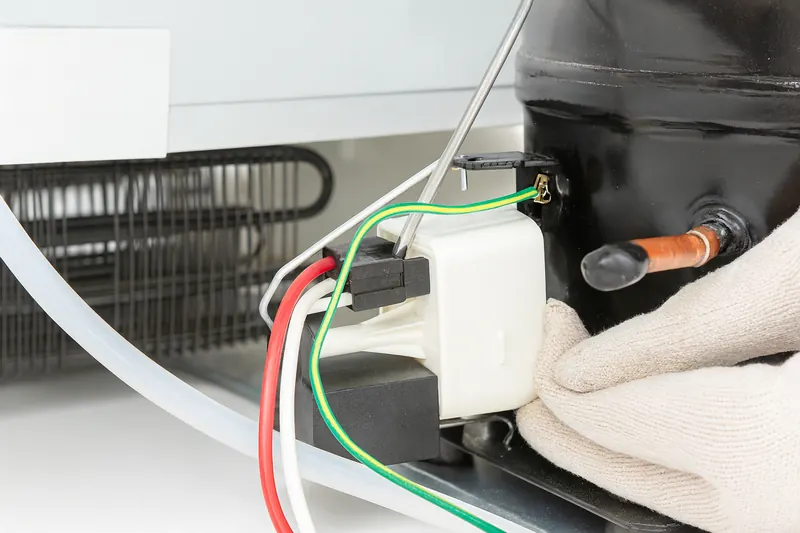
| Both warm, compressor silent or clicking every few minutes | Start relay, overload, inverter board or compressor | Compressor not starting |
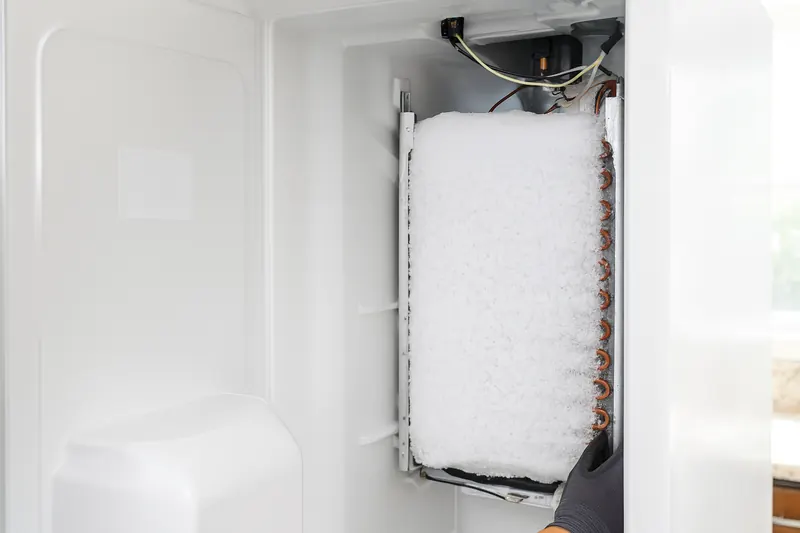
| Back wall of the freezer covered in ice | Defrost system failure | Frozen evaporator |
| Temperatures swing, or it is warm only some of the time | Damper, sensor, defrost timing or heat load | Temperature fluctuating |
| Stopped cooling after an outage or a move | Control lockout, tripped circuit, oil or wiring issue | After a power outage or move |
| No lights, no display, nothing runs | Power supply, outlet, breaker or main board | No power |
A symptom rarely identifies a single part. A warm fresh-food section, for example, can come from a $200 fan motor or from a refrigerant leak that has just begun. The pattern tells you where to look; testing tells you which part failed.
The four systems behind most cooling failures
Airflow from the freezer
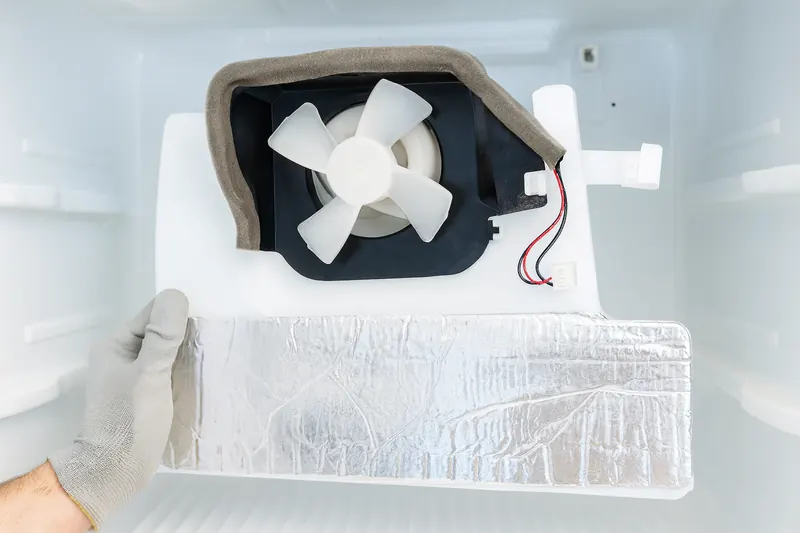
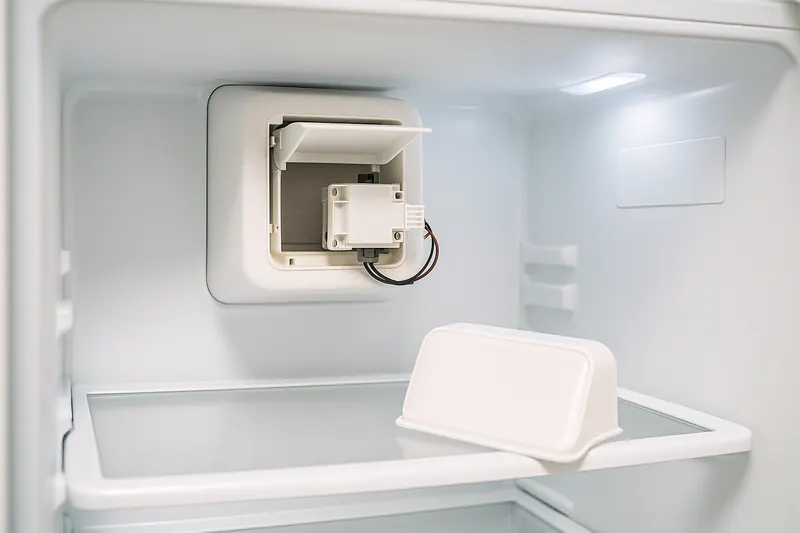
On nearly every frost-free refrigerator, the cold is produced at one evaporator coil behind the freezer's back panel. An evaporator fan pushes that air through the freezer and up a duct into the fresh-food compartment, often through a motorized damper. If the fan stops, the duct is blocked by ice, or the damper sticks closed, the freezer stays cold while the fridge warms up. This is the most common "not cooling" pattern we see, and it is usually repaired without touching the sealed system.
Defrost system
Frost from humid air collects on the evaporator coil. Several times a day a heater melts it off. When the defrost heater, the defrost thermostat or sensor, or the control fails, frost keeps growing until air can no longer pass through the coil. Cooling fades over several days — first in the fresh-food section, then in the freezer. A manual defrost restores cooling for a while, which is a strong clue. See frozen evaporator.
Condenser and condenser fan
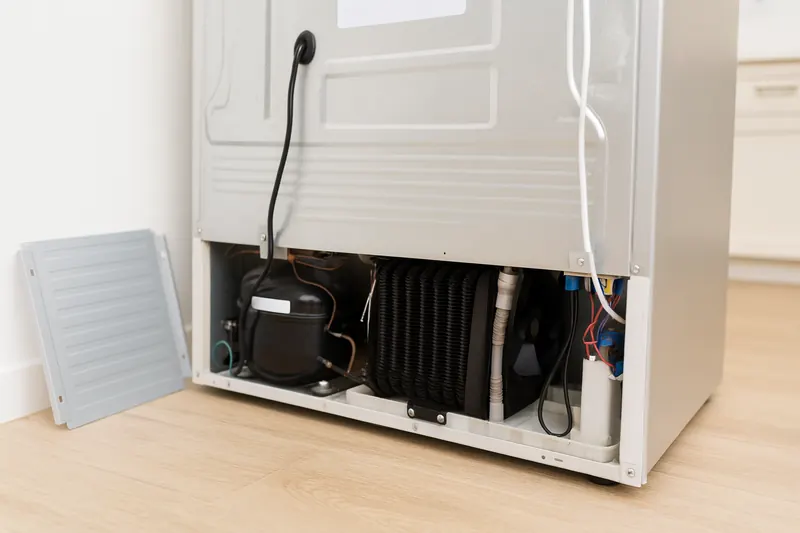
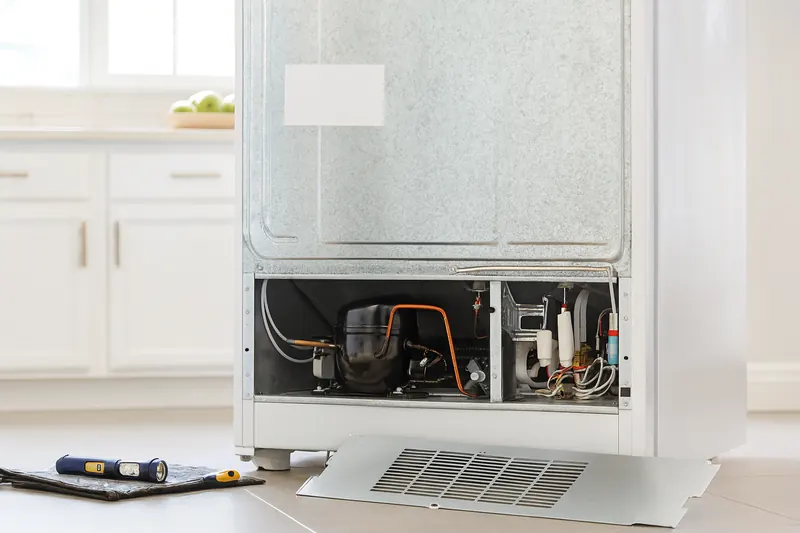
The condenser releases the heat removed from the food compartments. On freestanding refrigerators it sits under the unit behind the kick plate or at the back; on built-ins it is on top. A dust-packed coil or a stopped condenser fan raises pressures and temperatures, so the compressor runs longer, gets hotter and cools less. In Las Vegas this is the most common heat-related cause, and it often shows up the first week of 105°F weather.
Sealed system
The compressor, condenser, evaporator, filter-drier, capillary tube and refrigerant form a closed loop. A leak, a restriction in the capillary tube or drier, or a compressor that no longer pumps efficiently all produce the same complaint: everything runs, nothing gets cold enough. These failures are less common than airflow and defrost problems, but they are repairable by a certified technician — see running but not cooling and refrigerant leak repair.
What you can safely check
- Confirm the setting. Fresh food around 37°F, freezer at 0°F. Displays on many models show the setting, not the actual temperature.
- Clear the vents. Find the air outlets in the fresh-food compartment (usually top rear) and the freezer. Move anything pressed against them.
- Check the doors. A door held open half an inch by a container lets warm, humid air in all day. Close each door on a dollar bill in several spots — it should resist when pulled.
- Listen for the evaporator fan. On most models, open the freezer and press the door switch or light switch: you should hear and feel air moving.
- Look at the freezer's back panel. An even frost line or a white block of ice behind the vents means a defrost problem.
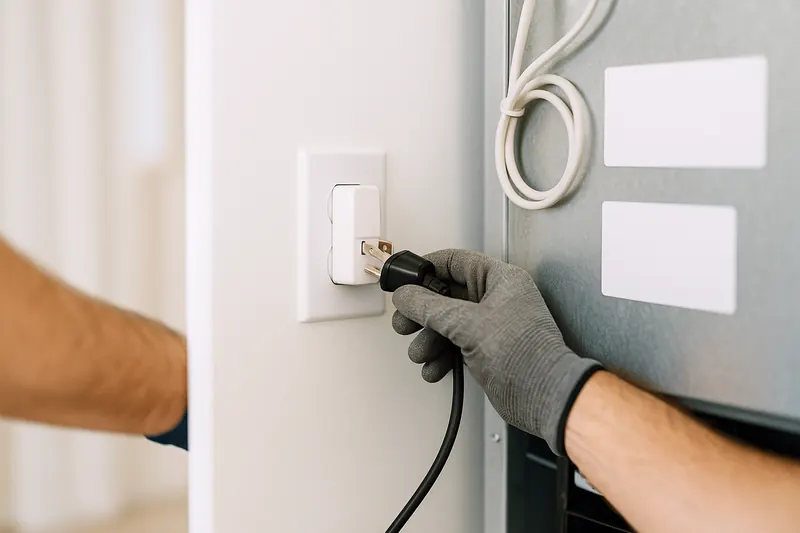
- Check the condenser area. On freestanding units, unplug the refrigerator, remove the kick plate and vacuum visible dust. Keep fingers away from the fan.
Do not open electrical panels, test live circuits, or touch compressor terminals. Those checks belong to a technician.
What a refrigerator technician checks
- Temperature split between compartments and between the evaporator inlet and outlet
- Evaporator frost pattern: fully frosted, partly frosted or bare tells different stories about airflow, defrost and refrigerant charge
- Fan operation and speed for both the evaporator and condenser fans
- Compressor operation: is it starting, how much current it draws, and whether it runs hot
- Defrost circuit: heater, defrost thermostat or sensor, and the board or timer that starts defrost
- Sensors (thermistors) against the manufacturer's resistance chart
- Damper operation where the model uses one
- Sealed-system condition only after the cheaper causes are ruled out
Repair or replace?
Airflow, defrost, fan and sensor repairs are usually a few hundred dollars and almost always worth doing. Sealed-system repairs cost more. They are worth it on built-in refrigerators and on most freestanding units under about 10 years old. See our repair-or-replace guide and pricing.
Frequently asked questions
How long should a refrigerator take to get cold?
After it is plugged in or restarted, most refrigerators reach a safe fresh-food temperature in 4 to 8 hours and full freezer temperature in about 24 hours. A refrigerator that is still warm after a full day has a problem.
Can a refrigerator run and still have a bad compressor?
Yes. A compressor can start and run normally while pumping too little refrigerant to cool properly. That is one of the harder diagnoses, and it is made only after airflow, defrost and condenser problems are ruled out.
How long can food stay in a refrigerator that is not cooling?
The USDA guidance is about four hours for a closed refrigerator without power. Once the fresh-food section is above 40°F for more than two hours, discard perishables.
Is a refrigerator that is not cooling usually the compressor?
No. Fans, defrost failures, dirty condensers and start components are far more common — and far cheaper — than compressor failures.