Why this happens
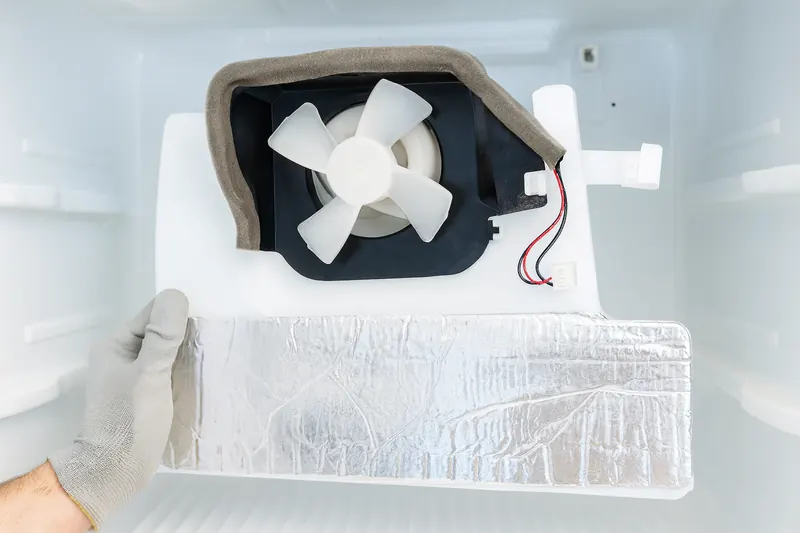
On most frost-free refrigerators there is only one evaporator, and it lives behind the freezer's back panel. The fresh-food compartment has no cooling of its own: it depends on cold air blown up a duct from the freezer. That design is why the freezer can stay cold while the refrigerator warms — anything that interrupts the airflow affects the fresh-food side first.
Refrigerators with separate fresh-food evaporators (many Samsung French-door models and most built-ins) behave differently. On those, a warm fresh-food side often means that compartment's own fan or defrost system has failed.
What it usually looks like
- The fresh-food section creeps up to 45–55°F over a day or two, while the freezer stays near 0°F or a little warmer
- Ice cream is still hard
- Little or no air coming out of the fresh-food vents
- Sometimes a grinding or ticking noise from the freezer that stops when the door opens
- Sometimes a sheet of frost visible through the freezer vents
Most common causes
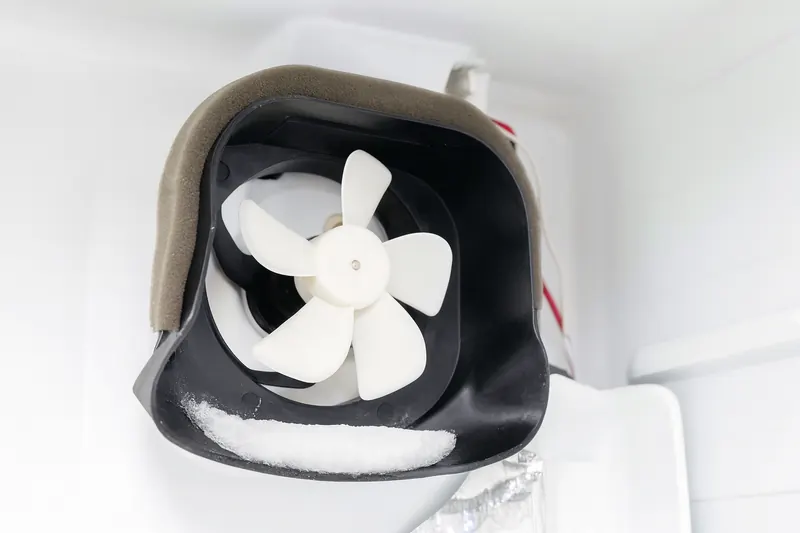
Failed evaporator fan motor
What fails: the fan motor stops or slows down, or its blade is jammed by ice. Clues: sudden warming over hours rather than days; no airflow from the freezer vents even with the door switch held in; the evaporator itself is still frosty because nothing is pulling air across it. Repair: replace the fan motor — and find out why ice reached the blade, if it did. See fan motor replacement.
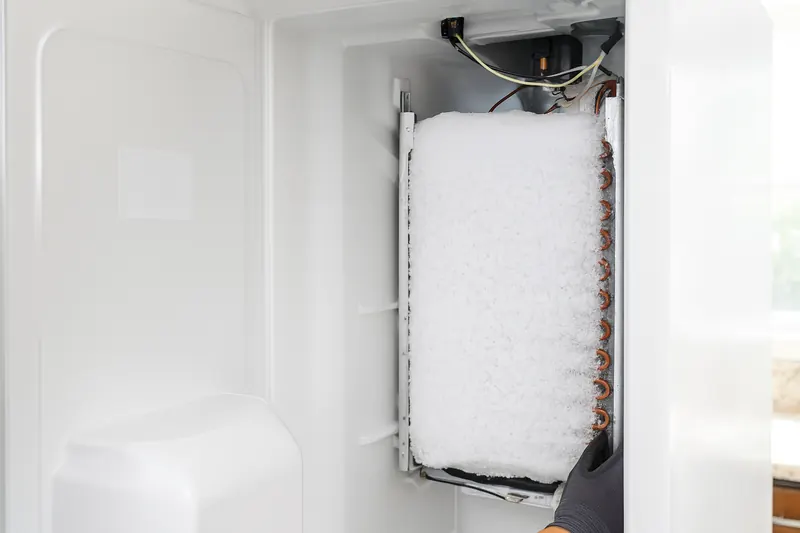
Evaporator coil blocked by ice (defrost failure)
What fails: the defrost heater, defrost thermostat or sensor, or the control that starts defrost. Clues: cooling fades gradually over several days; the freezer slowly warms too; a white wall of frost is visible behind the vents; cooling comes back for a few days after the refrigerator is unplugged. Repair: test and replace the failed defrost part. See frozen evaporator and defrost system repair.
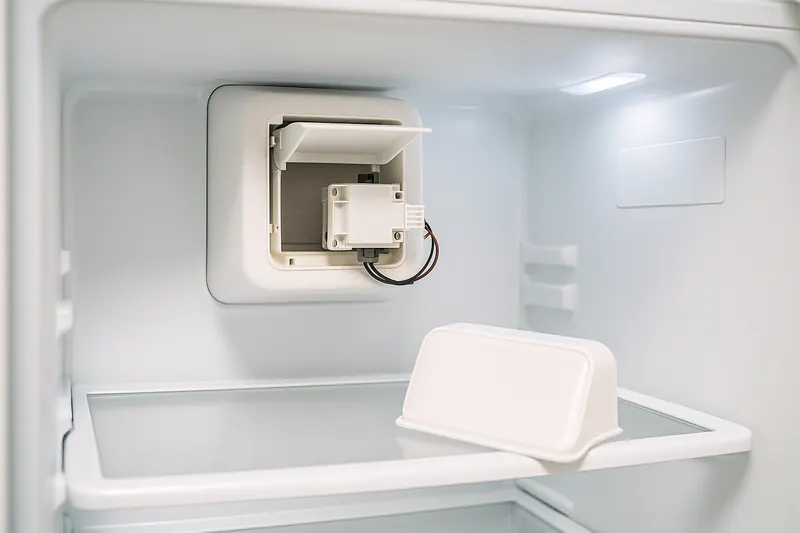
Air damper stuck closed
What fails: the motorized damper (or on older models a mechanical damper control) that meters freezer air into the fresh-food section. Clues: the fan runs and the freezer is cold, but almost no air enters the fridge; temperatures may swing day to day. Repair: replace the damper assembly or its control, and check for ice holding the damper door shut.
Blocked duct or vents
What fails: nothing — food or ice is in the way. Clues: an overfilled freezer pressed against the rear vents, or ice in the duct after the door was left ajar. Repair: rearrange food; if the duct is iced, a defrost and a check of door seals.
Fresh-food temperature sensor or control
What fails: a thermistor reads the wrong temperature, so the control never calls for cooling for the fresh-food side. Clues: the fresh-food display may read normal while a thermometer shows it warm. Repair: test the sensor against the manufacturer's chart; replace the sensor or, less often, the control board. See control board and sensor repair.
What you can safely check
- Rearrange the freezer so nothing blocks the rear vents.
- Hold the freezer door switch in and listen. A silent freezer usually means the fan has stopped.
- Look through the freezer vents with a flashlight. Heavy frost or solid ice behind them points to defrost.
- Make sure the fresh-food setting has not been turned up, and that the door closes on its own.
- If you see ice, a 24–48 hour manual defrost (unplugged, doors open, towels down) can get you through until a repair. If cooling returns and then fades again within weeks, that confirms a defrost failure.
What a refrigerator technician checks
- Air temperature at the fresh-food outlet versus the freezer
- Evaporator fan voltage and motor condition, and whether ice has reached the blade
- Evaporator frost pattern behind the panel
- Defrost heater, defrost thermostat or sensor, and the board's defrost output
- Damper movement and the signal driving it
- Fresh-food and evaporator thermistor readings
Most repairs for this symptom do not involve the sealed system.
Frequently asked questions
Why is my freezer cold but my refrigerator warm?
Because the fresh-food section is cooled by air blown from the freezer. When the evaporator fan fails, the coil ices over, or a damper sticks, the cold stays in the freezer.
Is this expensive to fix?
Usually not. Fan motors, defrost components, dampers and sensors are typically a few hundred dollars installed. See pricing.
Should I turn the temperature colder?
No. Turning the dial colder rarely helps, and on some designs it makes the freezer colder while the fridge stays warm. Find the cause instead.