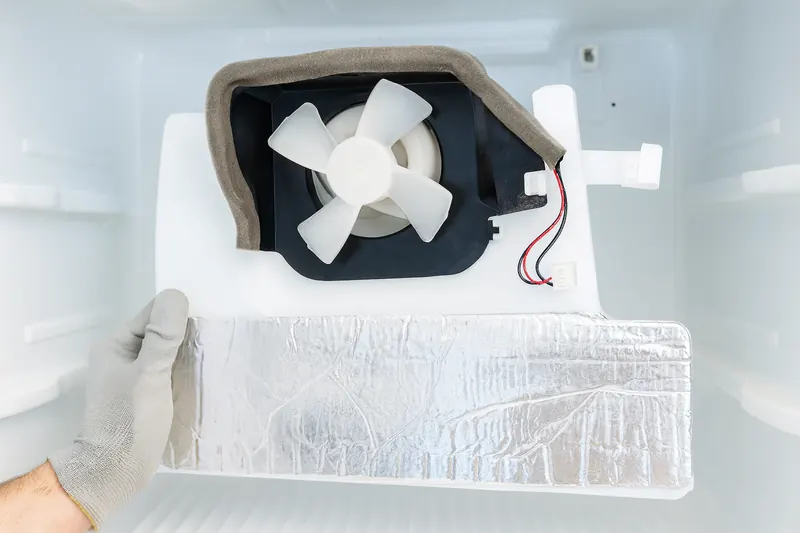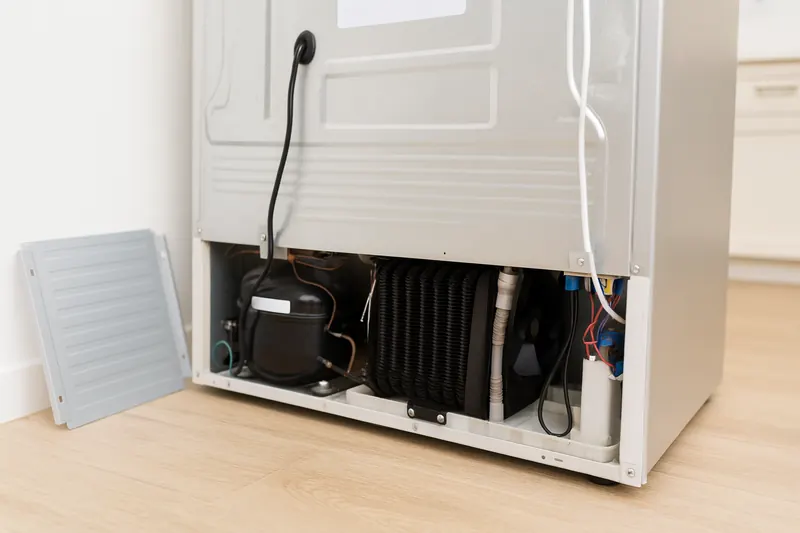
First, make sure it is really "running"
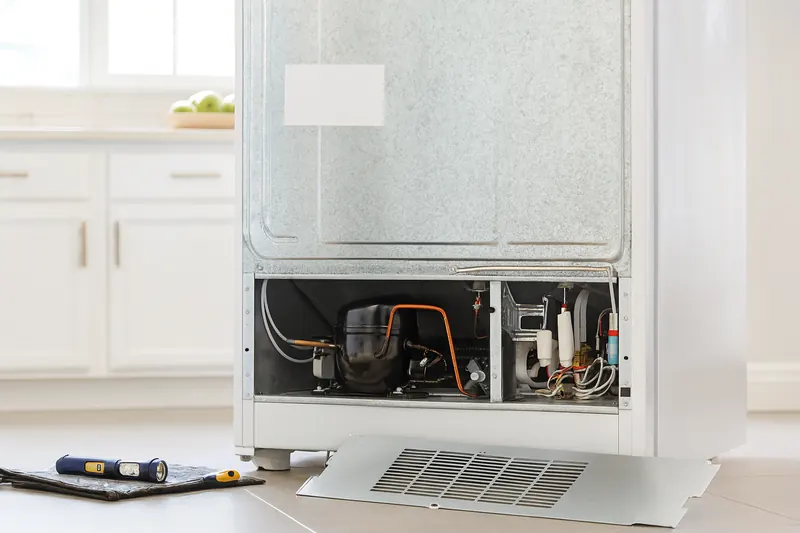
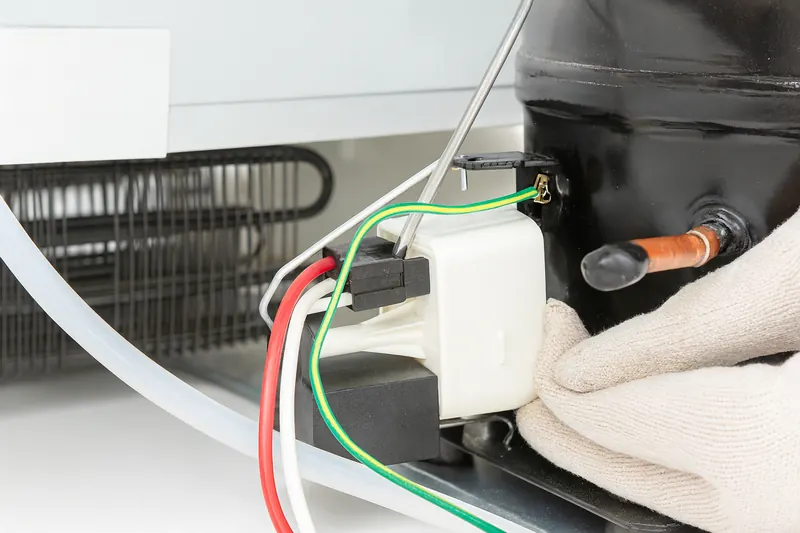
A humming refrigerator is not always a running compressor. Fans and the control board can be on while the compressor is not. Signs the compressor is actually running: a steady hum from the bottom rear (or top, on built-ins), warmth from the compressor area, and on freestanding models the condenser fan blowing warm air at the kick plate. If you hear a click every few minutes instead, see compressor not starting.
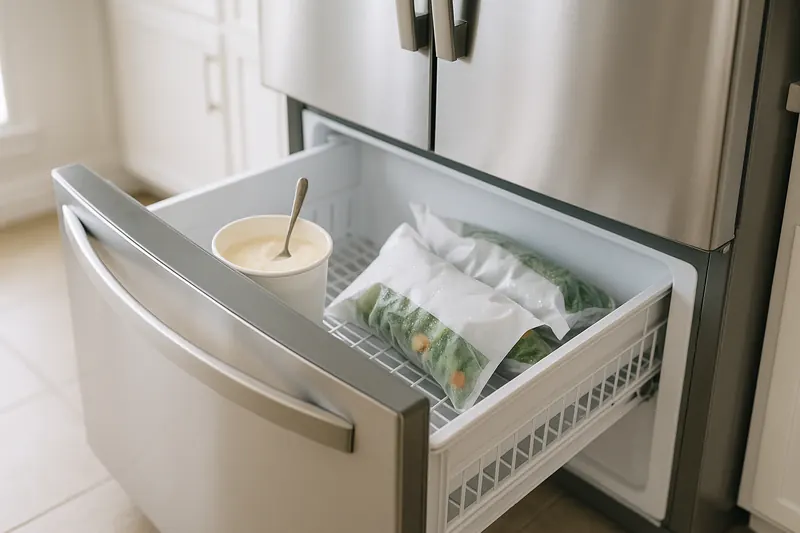
This page is about the case where the compressor runs and the evaporator fan moves air, yet neither compartment reaches temperature. If the freezer is cold and only the fridge is warm, see freezer cold, refrigerator warm instead.
Most common causes
Condenser cannot get rid of heat
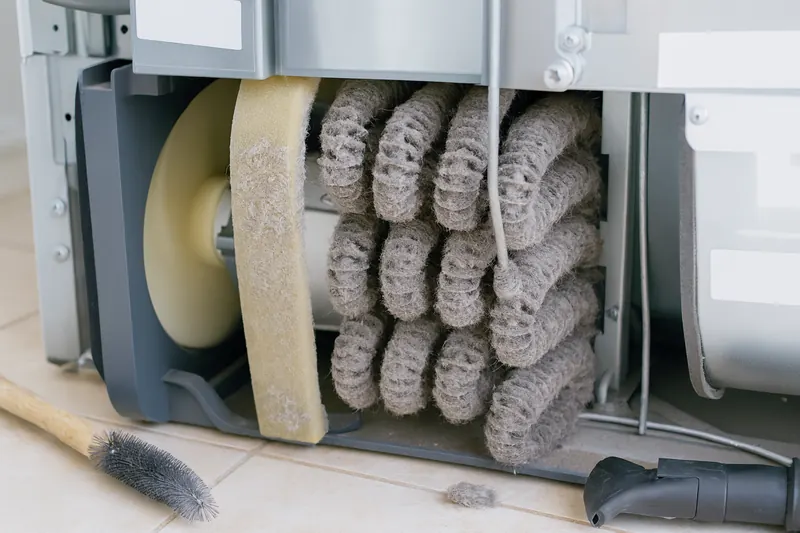
What fails: a dust-packed condenser coil, a stopped condenser fan, or a refrigerator boxed in without breathing room. Clues: the compressor and the area around it are very hot; the problem is worst on hot afternoons; cooling improves after the condenser is cleaned. Repair: clean the condenser, replace the condenser fan motor, restore clearance. This is the most common cause in Las Vegas and the cheapest. See refrigerator running constantly.
Refrigerant leak (low charge)
What fails: a pinhole in the evaporator, a cracked joint, corrosion in tubing, or a coil punctured while chipping ice. Clues: cooling declines gradually over weeks; the compressor runs almost nonstop; only the first part of the evaporator frosts, or it barely frosts at all; sometimes an oily spot at a joint. Repair: find and repair the leak, replace the filter-drier, evacuate and weigh in the factory charge. Topping off is not a repair. See refrigerant leak repair.
Restriction: capillary tube or filter-drier
What fails: moisture or debris partly blocks the capillary tube or the filter-drier, starving the evaporator. Clues: similar to a leak — weak, partial frosting and a long-running compressor — but the system is not actually short of refrigerant. A restricted drier may feel cold or sweat where it should be warm. Repair: replace the drier and clear or replace the restricted section; evacuate and recharge. Telling a restriction from a leak is a job for gauges, temperatures and experience, not guesswork.
Compressor running but not pumping efficiently
What fails: worn valves or internal wear in the compressor. Clues: the compressor runs and draws power, but pressures and evaporator temperatures show it is moving very little refrigerant. Usually found only after leaks and restrictions are ruled out. Repair: compressor replacement.
Inverter board or variable-speed control
What fails: on inverter-driven compressors (many LG, Samsung, Whirlpool, GE and built-in models), the board that sets compressor speed. Clues: the compressor runs only at very low speed or cycles erratically; sometimes an error code. Repair: test the board's output to the compressor, then replace the board or the compressor as indicated. See control board repair.
Defrost failure (late stage)
A long-ignored defrost problem can eventually block the whole evaporator so that both compartments warm up while the compressor runs. Look for ice behind the freezer panel. See frozen evaporator.
What you can safely check
- Unplug the refrigerator, remove the kick plate (or the top grille on built-ins) and vacuum the condenser.
- With power restored, check that the condenser fan spins whenever the compressor runs.
- Give the refrigerator at least 2–3 inches of clearance at the back and a clear path at the front grille.
- Look through the freezer vents for heavy ice.
- Note whether cooling faded over days or weeks, or stopped suddenly. That timeline helps the technician.
Never puncture, cut or "recharge" tubing yourself. Sealed-system work requires EPA Section 608 certification and proper recovery equipment.
What a refrigerator technician checks
- Compressor current draw and running temperature
- Condenser fan operation and condenser condition
- Evaporator frost pattern and temperatures along the coil
- Suction and discharge line temperatures, and where needed system pressures
- Filter-drier temperature drop, a sign of restriction
- Leak search with an electronic detector at joints, the evaporator and accessible tubing
- Inverter board output on variable-speed models
Repair or replace?
Condenser and fan repairs are inexpensive. Sealed-system repairs — leak repair, restriction clearing, compressor replacement — typically run from several hundred to well over a thousand dollars. They are usually worth it on built-in refrigerators and on freestanding units under about 10 years old in good condition. If another company called it "not repairable," a second opinion is worth the visit.
Frequently asked questions
How do I know if my refrigerator has a refrigerant leak?
You usually cannot confirm it yourself. Typical signs are cooling that fades over weeks, a compressor that never stops, and a partly frosted evaporator. A technician confirms it with temperatures, pressures and a leak search.
Can you just add refrigerant to my refrigerator?
Not as a repair. A low charge means a leak; adding refrigerant without fixing the leak only delays the failure and is not a legal practice under EPA rules.
Is a sealed-system repair worth it?
On a built-in or a newer freestanding refrigerator, usually yes. On an older freestanding unit, compare the quote with a comparable new refrigerator — see our repair-or-replace guide.