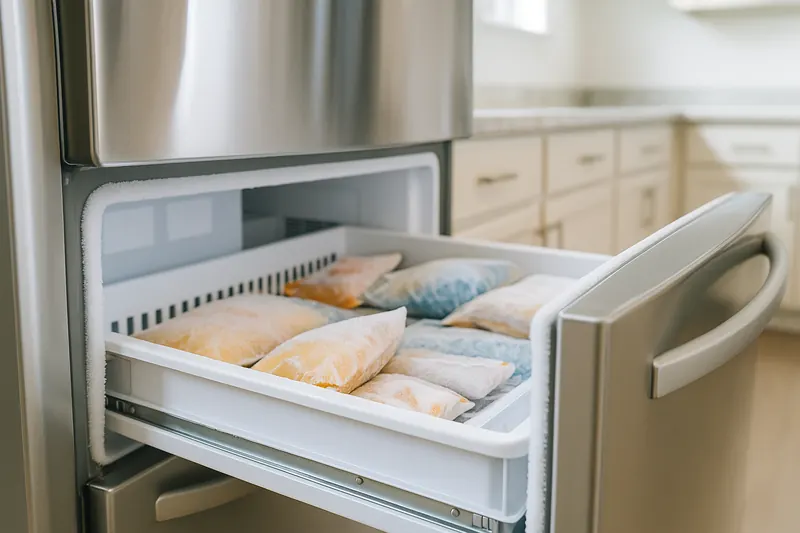
Two different kinds of frost
| What you see | What it means | Where to go |
|---|---|---|
| Frost on food, bags, shelves, walls and near the gasket | Humid air leaking in | This page |
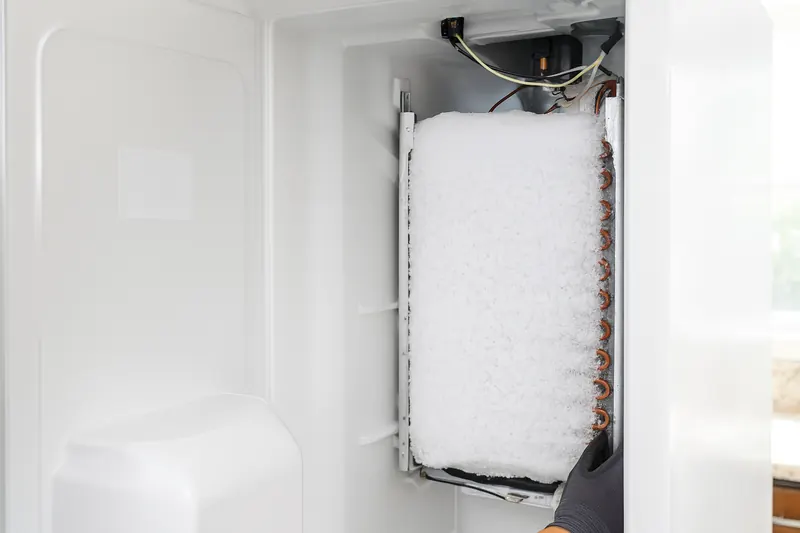
| Even frost or solid ice across the back panel | Automatic defrost has failed | Frozen evaporator |
| Ice concentrated on the freezer floor | Defrost drain frozen or blocked | Leaking water |
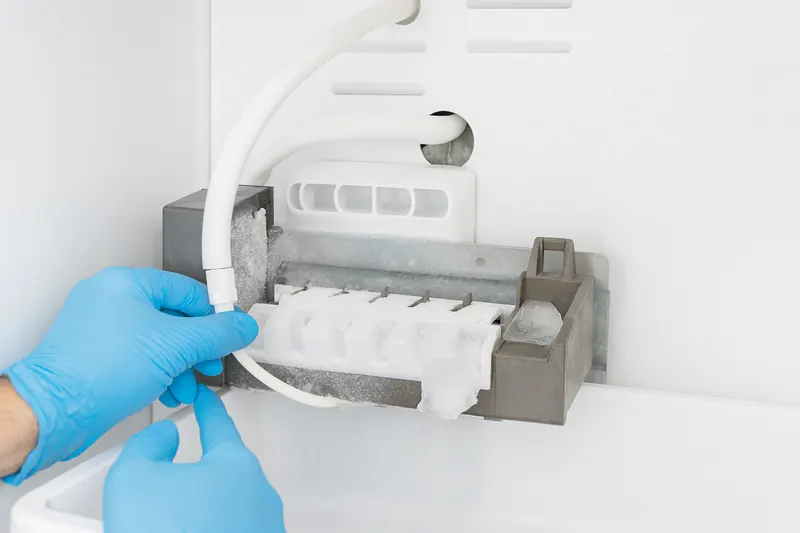
| Frost inside the ice compartment of a French-door model | Ice compartment seal or heater | Ice maker not working |
Why moisture frost happens
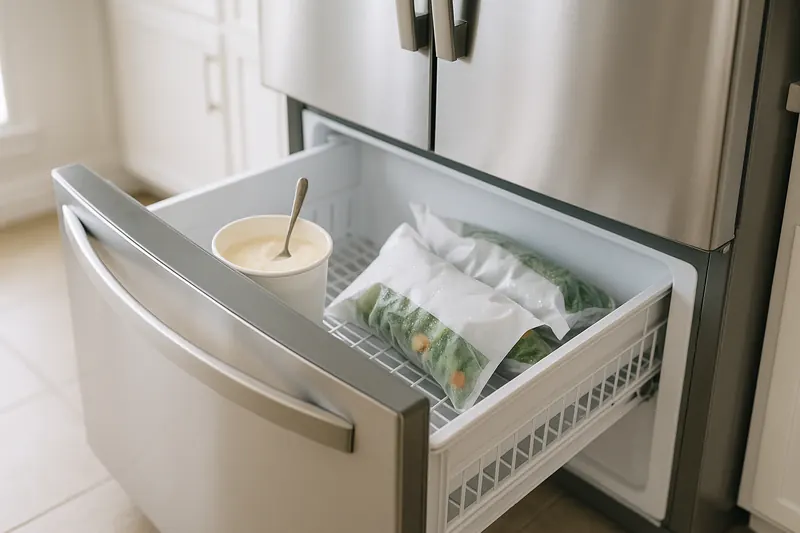
Air carries water vapor. When warm room air enters a freezer, the vapor freezes onto the coldest surfaces it meets — the food, the walls, and the cold edge near the door. A tiny gap running all day can deposit a surprising amount of frost in a week. Bottom-freezer drawers are especially prone, because a drawer that is not fully closed or that rides on worn rails leaves a gap you cannot easily see.
Common causes
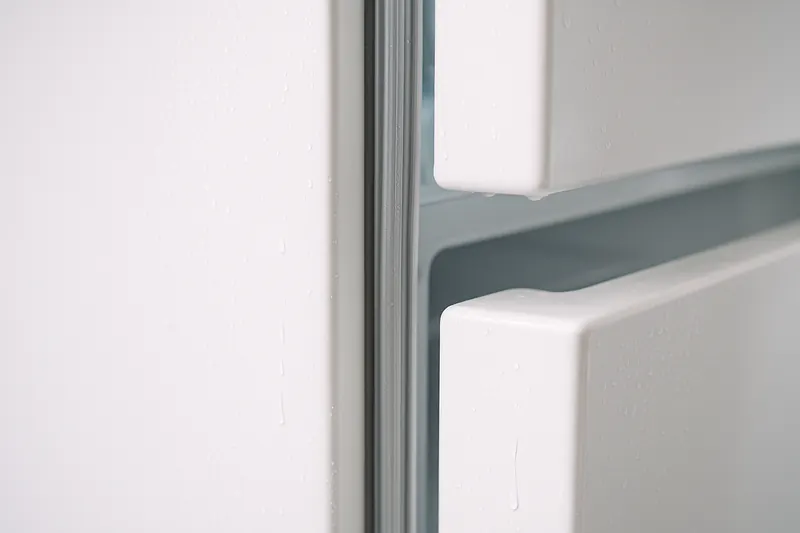
Door gasket not sealing
A torn, flattened, hardened or dirty gasket. Dry, hot Las Vegas air hardens rubber over the years. Repair: clean or replace the gasket. See door gasket and hinge repair.
Door or drawer not closing fully
An overfilled drawer, a bag caught in the seal, a broken drawer rail, a sagging hinge, or a refrigerator that is not tilted slightly back so doors swing closed.
Frequent or long door openings
Every opening exchanges cold, dry air for warm, moist air. Kids, parties and summer ice runs add up.
Ice maker or dispenser area
On some designs, a sticking ice chute door or a worn ice compartment seal lets air in around the dispenser.
What you can safely check
- Close the door or drawer on a dollar bill in several spots; it should resist when pulled.
- Look for packaging or food caught in the seal.
- Clean the gasket with warm soapy water and dry it.
- Check that the drawer slides fully closed and sits evenly.
- Make sure the refrigerator is level and slightly tilted back.
What a refrigerator technician checks
- Gasket seal all the way around, including corners
- Hinge, closer and drawer-rail condition
- Leveling and door alignment
- Ice chute door and ice compartment seals
- Whether moisture has already started icing the evaporator
Frequently asked questions
Why is there frost on my frozen food?
Moist air is getting in, or food was put in warm and its own moisture froze onto it. Check the door seal and let hot food cool first.
Is frost in the freezer dangerous?
No, but it causes freezer burn and, if heavy, can block vents and reduce cooling.
Why does my freezer frost up so fast?
A seal leak is the usual reason. If the frost is on the back panel instead, the refrigerator has stopped defrosting — see frozen evaporator.