What each sound usually means
| Noise | Where | Likely cause |
|---|---|---|
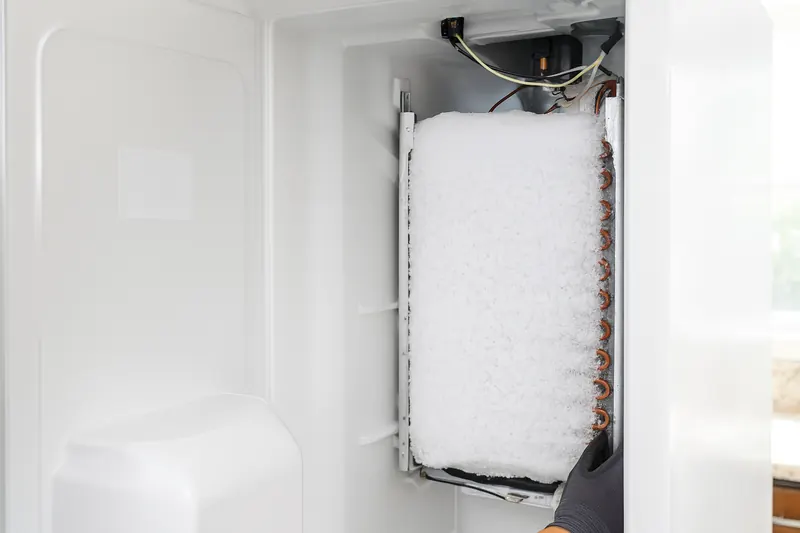
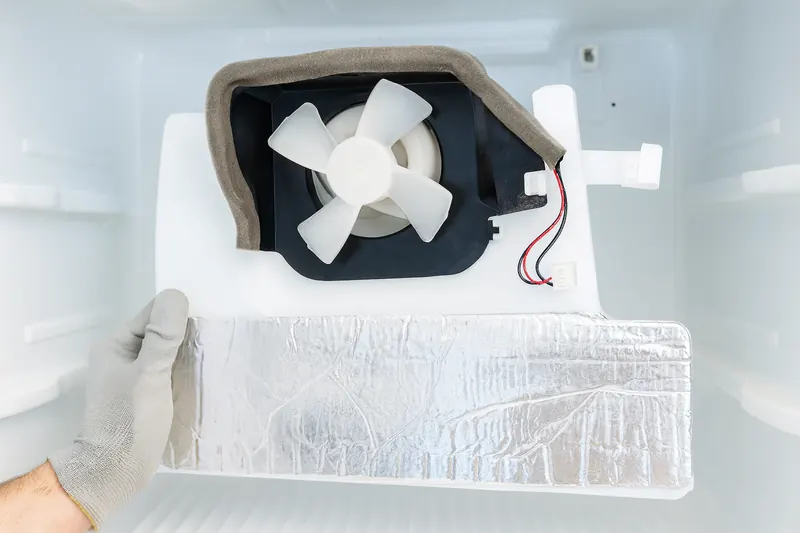
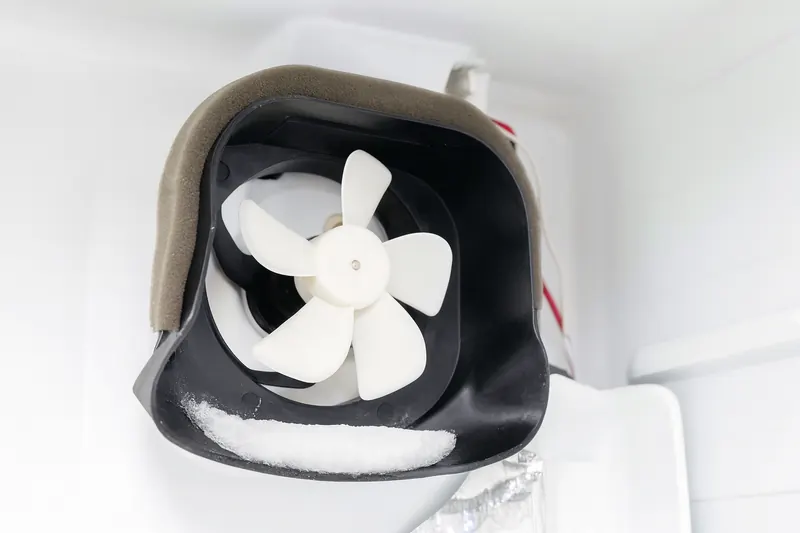
| Grinding, scraping, ticking | Freezer, back wall | Ice touching evaporator fan blade; worn fan motor |
| Squealing or chirping | Freezer or bottom rear | Fan motor bearing wearing out |
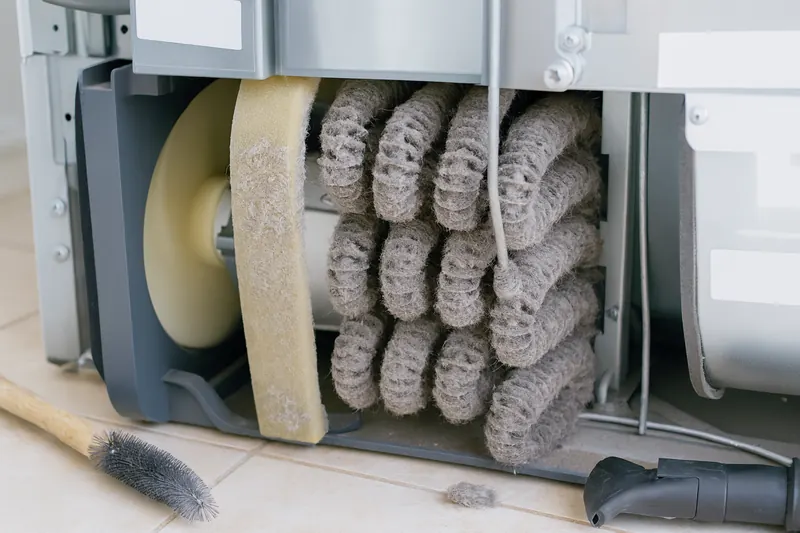
| Rattling | Bottom of unit | Loose drain pan, condenser fan hitting debris |
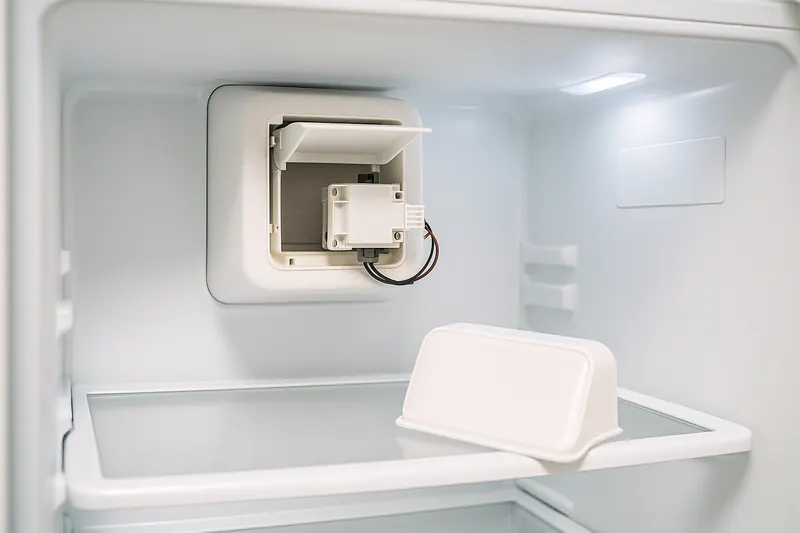
| Buzzing when ice maker fills | Back of unit | Water valve running without water supply |
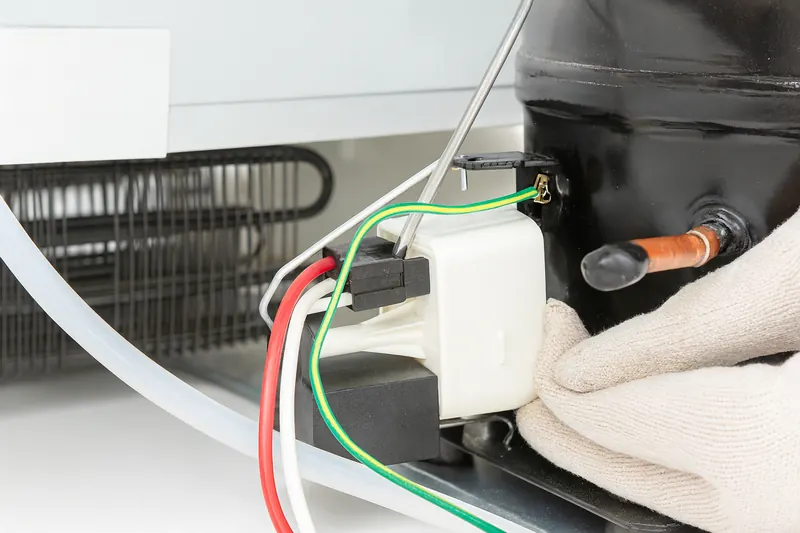
| Click every few minutes, no cooling | Bottom rear | Compressor not starting — relay, overload or compressor |
| Loud humming | Compressor area | Compressor working hard, possibly a dirty condenser |
| Popping or cracking | Inside | Normal expansion during defrost |
| Gurgling or hissing | Inside | Normal refrigerant flow or defrost water |
Normal sounds you can ignore
Modern refrigerators make more noise than older ones because they use variable-speed compressors and multiple fans. Gurgling, light hissing, a soft hum and occasional pops during defrost are normal.
When noise means a repair is needed
- The noise is new and getting louder
- The noise comes with warm temperatures
- You hear clicking every few minutes and the refrigerator is not cooling — see compressor clicking
- You hear grinding that stops when you open the freezer door (the fan stops when the door opens) — a classic sign of ice on the fan
What a refrigerator technician checks
- Exactly where the noise comes from with doors open and closed
- Evaporator and condenser fan bearings and blade clearance
- Ice contact on the evaporator fan (a sign of a defrost problem)
- Compressor mounting grommets and tubing touching the cabinet
- Water valve operation and supply pressure
- Compressor start behavior if the sound is a repeated click
Frequently asked questions
Why does my refrigerator make a loud noise when the ice maker fills?
The water inlet valve opens with a click and a buzz. A loud, long buzz with no water flowing suggests a closed supply valve or a failing water valve.
Is a noisy refrigerator about to break?
Not necessarily. But fan noise often comes before fan failure, and a failed fan can lead to warm temperatures. It is cheaper to replace a noisy fan than to lose a refrigerator full of food.