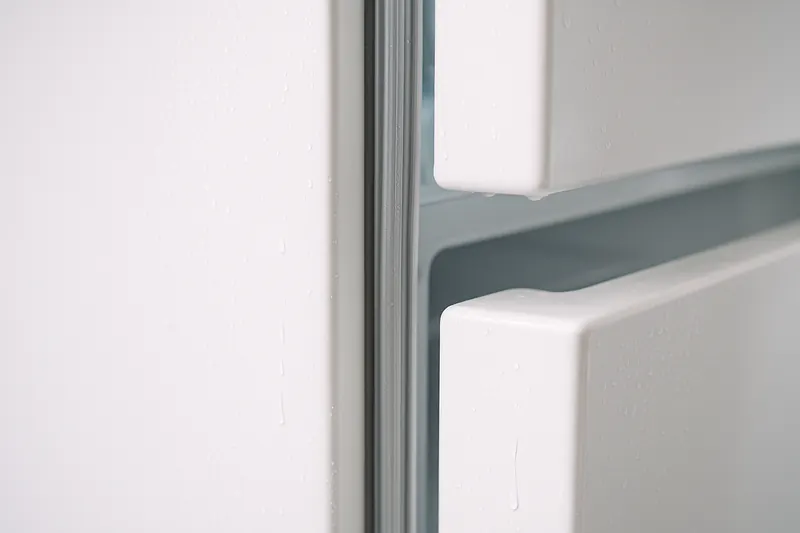
Where is the moisture?
| Location | Most likely cause |
|---|---|
| Inside, on walls and shelves | Door not sealing, frequent long openings, or uncovered liquids |
| On the cabinet face around the door opening | Gasket leak at that spot, or a failed anti-sweat (mullion) heater |
| On the center flipper between French doors | Flipper mullion heater failed, or the flipper is not folding correctly |
| On the outside of the doors | High humidity, or a door gasket leaking along that edge |
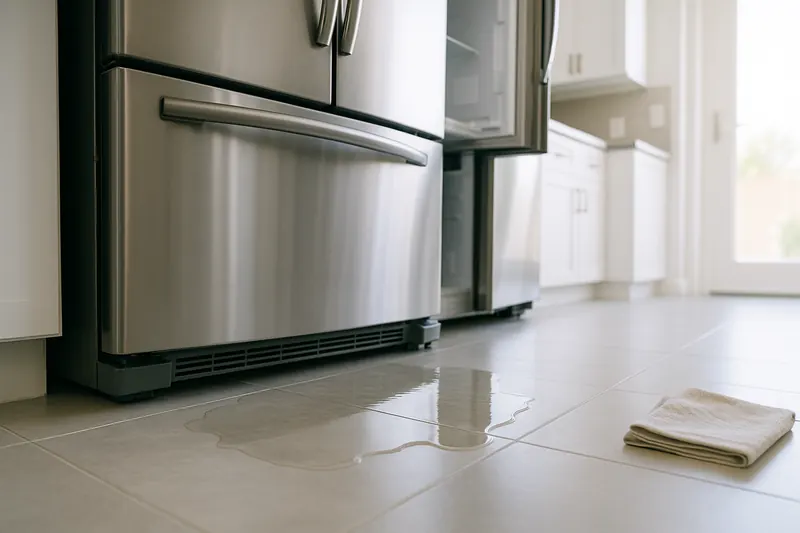
| Water pooling under the crisper drawers | Blocked defrost drain — see leaking water |
Most common causes
Door gasket not sealing
Gaskets harden, flatten and tear with age. In the dry, hot Las Vegas climate they also shrink. A gasket that does not seal along even a few inches lets humid air in all day. Check: close the door on a dollar bill in several spots — it should resist when pulled. Repair: clean or replace the gasket. See door gasket and hinge repair.
Door out of alignment or not closing
Doors should swing closed on their own. A refrigerator that is not level (front slightly higher than the back), a sagging hinge, or an overloaded door bin can leave a gap. Heavy custom-panel doors on built-ins are especially prone to sagging over time.
Flipper mullion or anti-sweat heater
On French-door refrigerators, the vertical flipper that seals between the doors contains a small heater to keep it from sweating. Many refrigerators also have heater loops in the cabinet face around the door openings. If a heater fails, condensation forms on that strip even though the gasket is fine.
Humidity and usage
Long door openings, many quick openings, and uncovered pots of warm food add moisture. In most of the year Las Vegas air is dry, but summer monsoon humidity can briefly produce condensation that disappears on its own.
What you can safely check
- Do the dollar-bill test around every door and drawer.
- Clean gaskets with warm soapy water; sticky residue can keep them from sealing.
- Check that the refrigerator is level side to side and tilted slightly back.
- On French-door models, make sure the center flipper folds and seats properly.
- Cover liquids and let hot food cool before storing it.
What a refrigerator technician checks
- Gasket seal all the way around, including corners and hinge side
- Hinge wear, door sag and leveling
- Mullion and anti-sweat heater continuity
- Whether moisture has already caused frost buildup or ice on the evaporator
Frequently asked questions
Why is my refrigerator sweating on the outside?
Usually a gasket is leaking at that spot, or the anti-sweat heater behind the cabinet face has failed. Occasionally it is just very humid air.
Why is there condensation inside my refrigerator?
Warm, humid air is getting in — through a door that does not seal or from frequent openings — and condensing on cold surfaces. A blocked defrost drain can also leave water inside.
How do I know if my refrigerator door seal is bad?
Close the door on a dollar bill. If it slides out without resistance anywhere, the gasket is not sealing there. Also look for tears, flat spots and hard sections.