No power at all
What you can safely check
- Breaker panel. Look for a tripped breaker labeled kitchen or refrigerator and reset it once.
- GFCI outlets. Some refrigerators share a circuit with a GFCI outlet elsewhere in the kitchen, garage or exterior. Press "reset" on nearby GFCIs. Garage refrigerators are often on a GFCI.
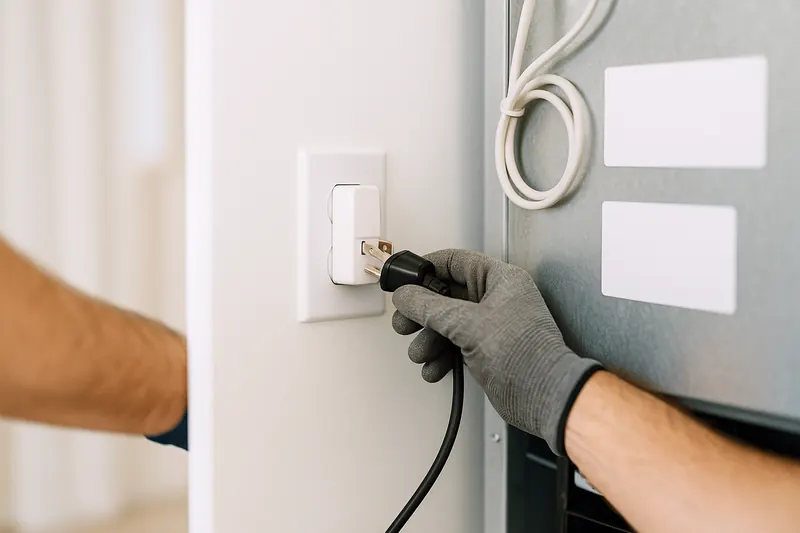
- The outlet. Plug a lamp or phone charger into the same outlet. If it does not work either, the problem is the house wiring, not the refrigerator.
- The cord and plug. Look for scorched, melted or crushed spots — especially if the refrigerator was recently pushed back into place. Do not use a damaged cord.
- Lighting vs. cooling. If the lights work but nothing cools, the refrigerator does have power — see refrigerator not cooling.
If the outlet works but the refrigerator is dead
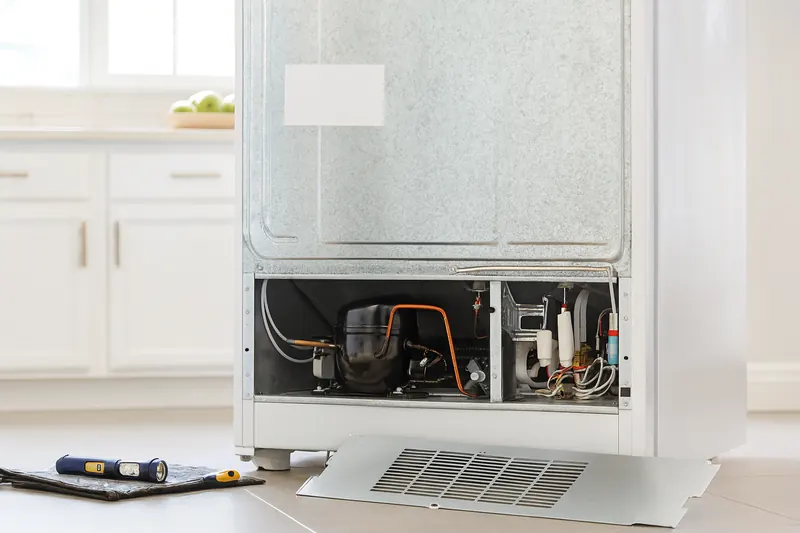
Common causes are a failed main control board or power supply board, a failed display / user-interface board (the refrigerator may actually be running), a door switch or light problem on older models, or a wiring harness fault — often in the door hinge, where wires flex every time the door opens. A technician checks voltage at the board inputs and outputs and traces the harness; this is not something to probe live at home.
Tripping the breaker or GFCI
A breaker or GFCI that trips is doing its job: something is drawing too much current or leaking current to ground. Common sources:
| Source | Clues |
|---|---|
| Defrost heater shorted to ground | Trips during defrost — often hours after a reset, not immediately |
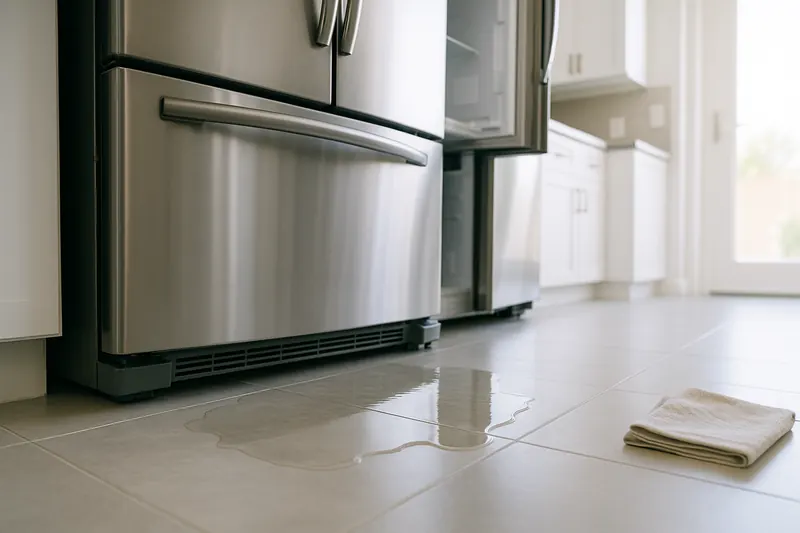
| Water in a harness or connector | Trips after the ice maker fills, after cleaning, or after a water leak |
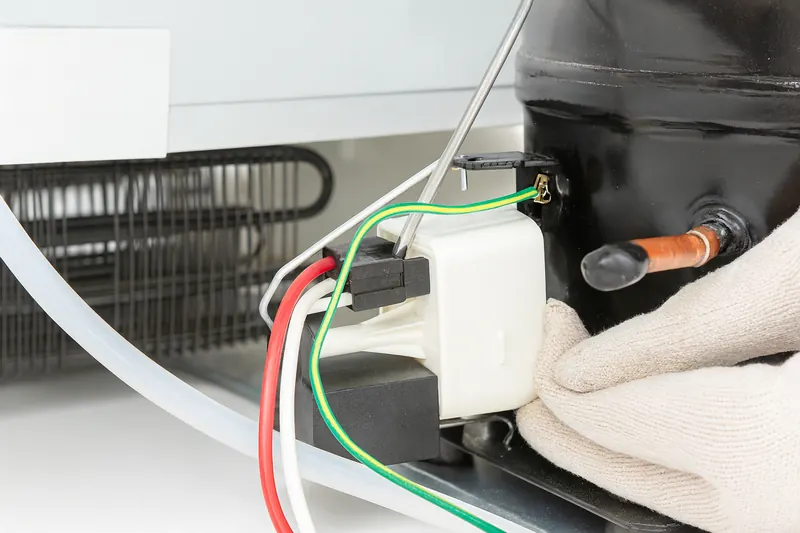
| Compressor winding shorted to its case | Trips the moment the compressor tries to start |
| Damaged cord or plug | Visible damage, sometimes a burning smell |
| Shared, overloaded circuit | Trips when another appliance on the same circuit runs |
Do not bypass a GFCI, switch to a larger breaker, or run the refrigerator from an extension cord to "solve" tripping. Those workarounds remove the protection that is preventing a shock or fire.
What a refrigerator technician checks
- Supply voltage and the circuit the refrigerator is on
- Insulation resistance of the defrost heater, compressor and fan motors to ground
- Harness and connector condition, especially at the door hinges and near water components
- Control and power board inputs and outputs
- Compressor windings and start components, if the trip happens at compressor start
Las Vegas note
Summer storms and grid strain can cause outages and voltage spikes. Refrigerators with electronic boards benefit from a surge protector rated for appliances. If the refrigerator died right after an outage or a storm, see not cooling after a power outage.
Frequently asked questions
Why does my refrigerator keep tripping the GFCI?
Most often because of a small current leak to ground — a defrost heater, moisture in a connector, or a compressor winding. GFCIs are very sensitive, so they catch these faults before a standard breaker would.
Can a power surge kill a refrigerator?
It can damage the control or power board. Sometimes the board survives and only needs a reset; sometimes it has to be replaced. The compressor itself is less often affected.
Is it safe to keep resetting the breaker?
Resetting once is reasonable. If it trips again, leave it off and have the refrigerator checked — repeated resets can turn a minor fault into a fire risk.