After a power outage
What is normal
- The display may flash, show a power-failure alert ("PO" on many Whirlpool-built models), or show a high-temperature alarm. Clear the alert and let it run. See error codes.
- Some controls wait several minutes before restarting the compressor to protect it. Silence for 5–10 minutes is normal.
- Recovery takes hours, longer with a full load of warm food or on a hot day.
What is not normal
- No lights or display at all → see no power
- The compressor clicks every few minutes but never runs → see compressor not starting
- Lights and fans work, but it is still warm after 24 hours → a board, sensor or sealed-system problem needs diagnosis
- The breaker or GFCI trips when power returns
Why outages damage refrigerators
When power returns, it can arrive with a spike, or flicker on and off several times. The control board and the compressor's start components take the brunt of it. A compressor that tries to restart against high pressure seconds after shutting off may trip its overload repeatedly; most controls have a delay to prevent that, but older and simpler models do not.
Protect it next time: a surge protector rated for appliances, and if outages are frequent, unplug the refrigerator during a flickering outage and plug it back in a few minutes after power stabilizes.
After moving the refrigerator
Let it settle
Refrigerators are designed to stand upright. If it was laid down or tilted heavily during the move, compressor oil can drift into the refrigerant lines. Leave it upright before plugging in — a few hours is a common recommendation, and some manufacturers ask for longer after the unit was on its side. Check your owner's manual.
Common post-move problems
- Pinched or kinked water line behind the unit — no ice, no water, or a leak
- Damaged power cord from being rolled over or crushed against the wall
- Door alignment knocked out of adjustment, so doors no longer seal — see refrigerator sweating
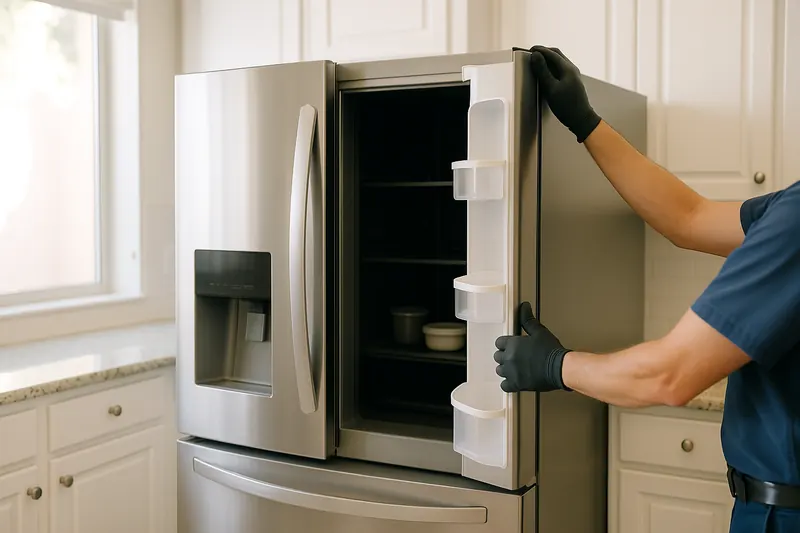
- Disconnected or pinched harness at the door hinges if doors were removed to fit through a doorway
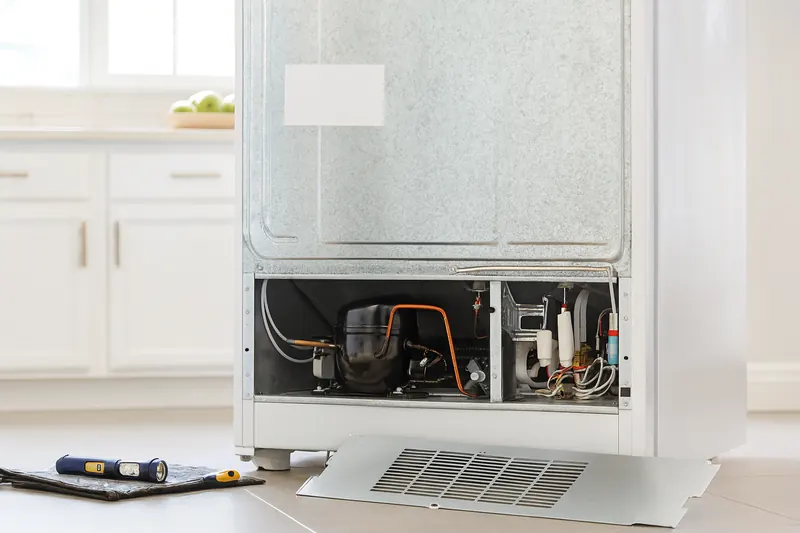
- Bent tubing or a cracked joint in the machine compartment from a hard bump — a sealed-system problem
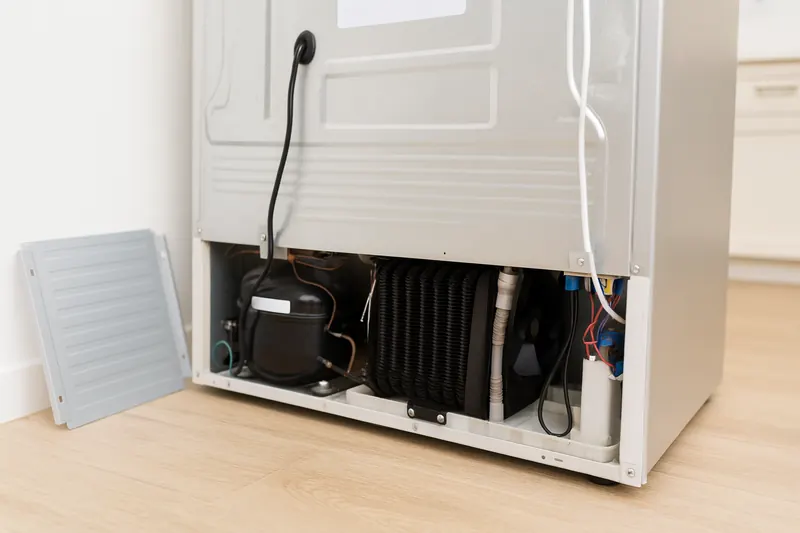
- Blocked condenser airflow in the new location, especially if it is now in a tight alcove or a hot garage
What a refrigerator technician checks
- Supply voltage and whether the control actually commands the compressor to start
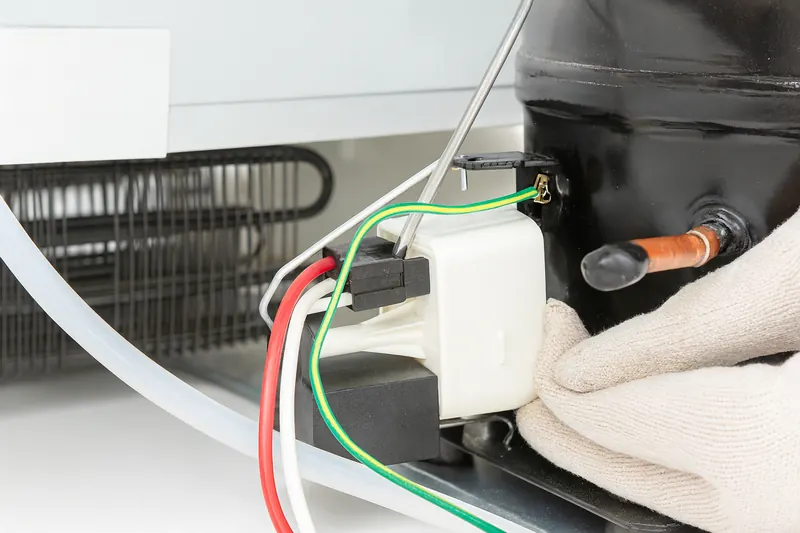
- Start relay, overload and inverter board after an outage
- Control board inputs and outputs and any stored fault codes
- Harness continuity at door hinges after a move
- Sealed-system behavior if lines may have been damaged in transit
Frequently asked questions
How long does a refrigerator take to cool after being off?
Typically 4 to 8 hours for the fresh-food section and up to 24 hours for the freezer, depending on how warm it got, how full it is, and the room temperature. In a hot Las Vegas garage it will take longer.
Why isn't my refrigerator cooling after the power came back on?
Most often the control needs time or a reset, a breaker or GFCI tripped, or the outage damaged the control board or start components. If lights work but it is still warm after a day, it needs a diagnosis.
My refrigerator stopped cooling after I moved it. What happened?
The most common causes are a refrigerator plugged in too soon after being laid down, a damaged cord or harness, poor airflow in the new spot, or — less often — a damaged sealed system.